Total Lunar Eclipse on March 3, 2026 (Blood Moon)
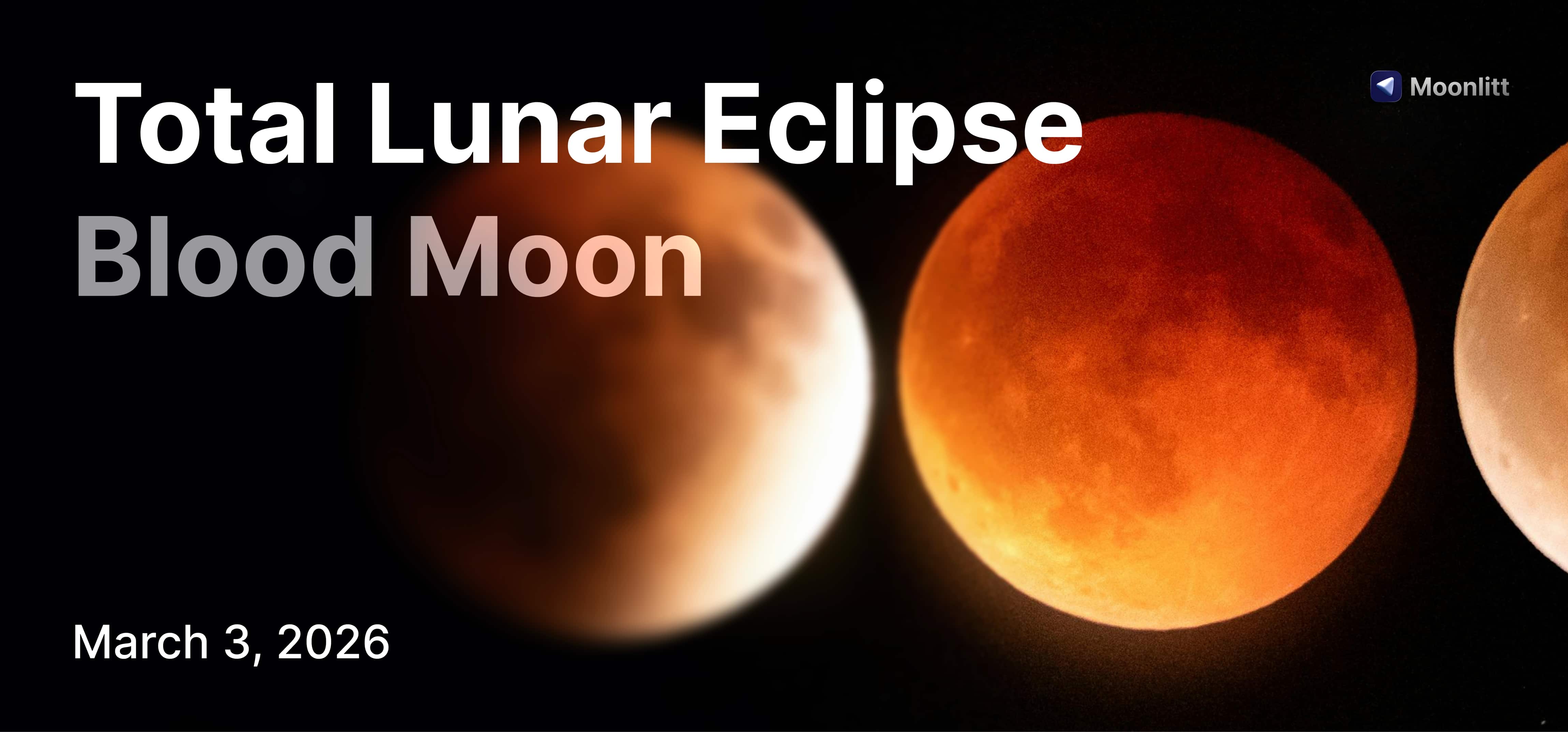
On March 3, 2026, the full Moon will pass completely into Earth’s shadow in a total lunar eclipse.
For viewers in northeast Asia, northwestern North America, and parts of the central Pacific, the entire eclipse will be visible from start to finish. Elsewhere, only part of the event may be visible or the Moon may not rise in time.
During totality, the Moon will not disappear. Instead, it will slowly turn shades of red, copper, and orange. This is the reason total lunar eclipses are often called Blood Moons.
This is one of the most relaxed sky events to watch. No eye protection. No special equipment. Just time and a clear view of the Moon.
What Is a Total Lunar Eclipse?
A total lunar eclipse happens when:
The Moon is full
Earth lines up directly between the Sun and the Moon
The Moon moves fully into Earth’s darkest shadow, called the umbra
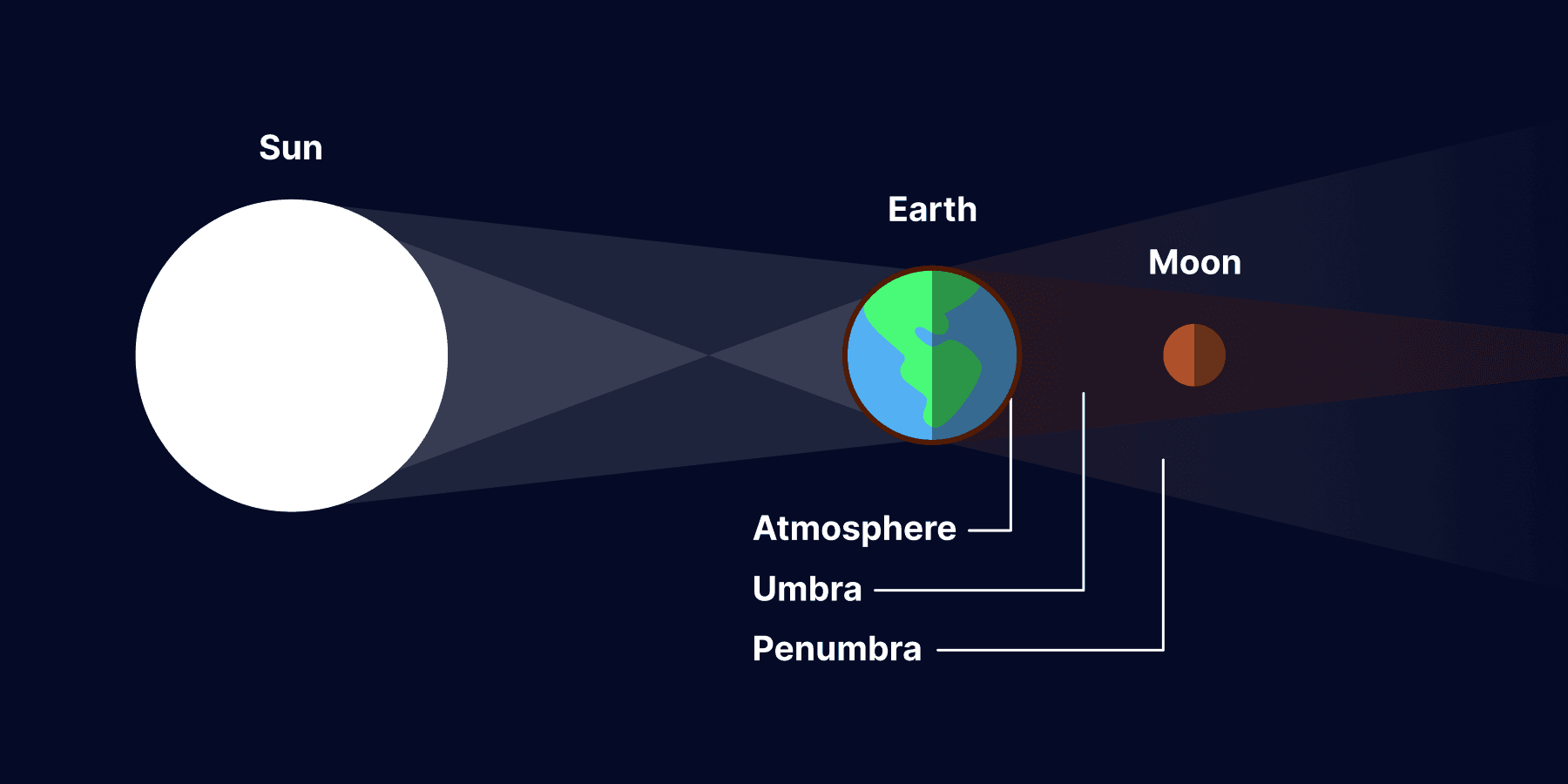
But instead of going dark, the Moon changes color. Here's why:
Sunlight still reaches the Moon, but indirectly. Earth’s atmosphere bends and filters the light, scattering blue wavelengths and letting red and orange light pass through. That filtered light is what softly illuminates the Moon during totality.
Every Lunar Eclipse looks a little different. The Moon’s color can appear:
Brick red
Burnt orange
Copper
Or deep brownish-red
The exact shade depends on the state of Earth’s atmosphere at the time. Dust and aerosols filter the sunlight, shaping how bright or dark totality appears. Major volcanic eruptions can temporarily deepen the red tone, but since they are uncommon, past atmospheric data can still be used to provide fairly reliable estimates.
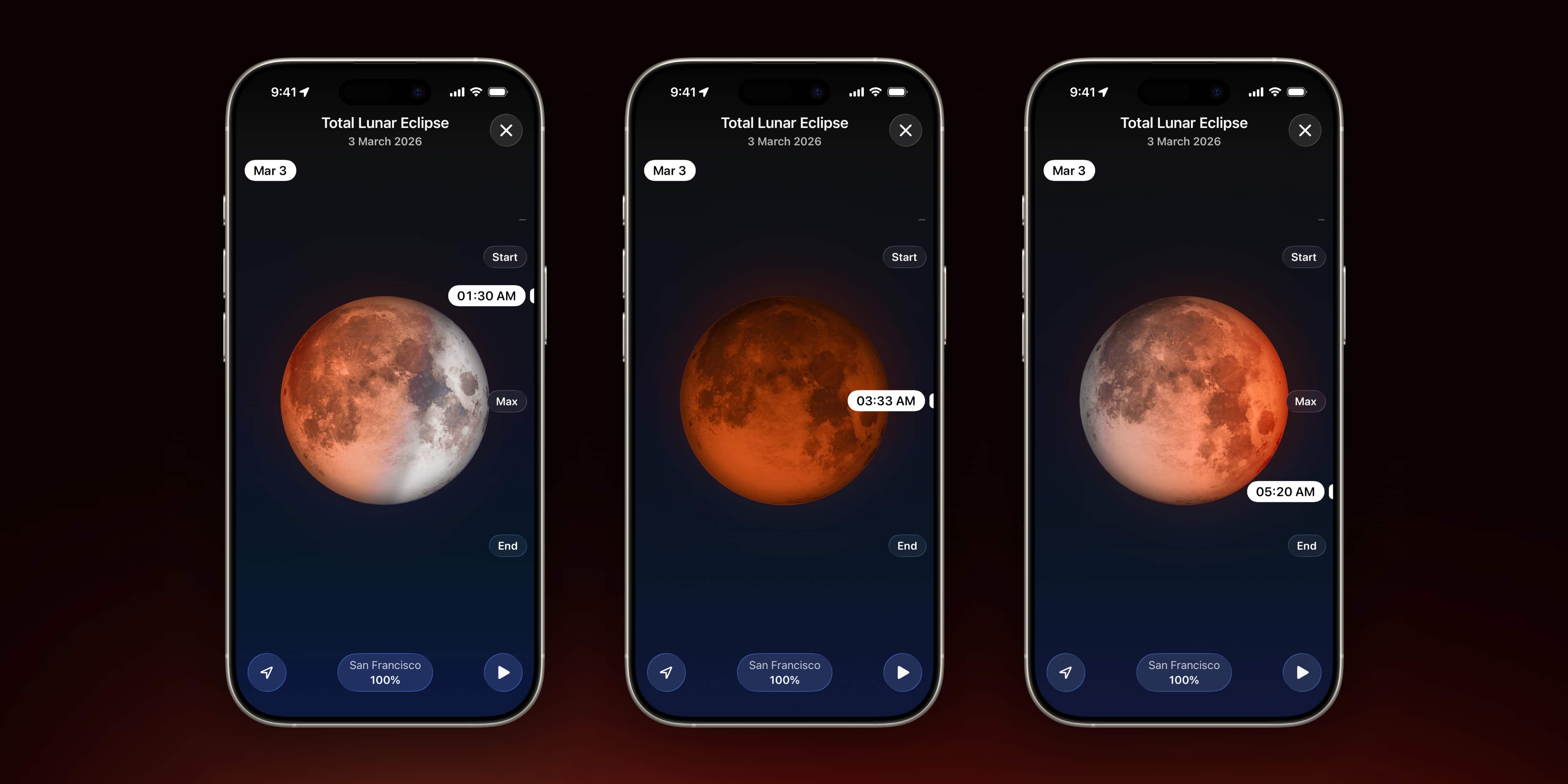
Moonlitt forecasts expected Moon color shifts for more than 200 upcoming lunar eclipses, helping you preview how dark or red totality may look from your location.
Why It’s Called a Blood Moon
“Blood Moon” is a popular name for a total lunar eclipse. It is not a scientific term, but a descriptive one.
The name refers to the Moon’s appearance during totality, when it takes on a deep reddish or orange tone while fully inside Earth’s umbra. The color can vary from one eclipse to another.
Some total eclipses produce a brighter copper glow, while others appear darker and more muted. Both are normal. The difference depends on how much light Earth’s atmosphere filters at the time.
When and Where the Eclipse Is Visible
The March 3, 2026 eclipse will be completely visible from much of Asia, Australia, and parts of North America. In other regions, observers may see only the beginning or ending phases, the Moon rising or setting during the eclipse, or no visibility at all, depending on local timing.
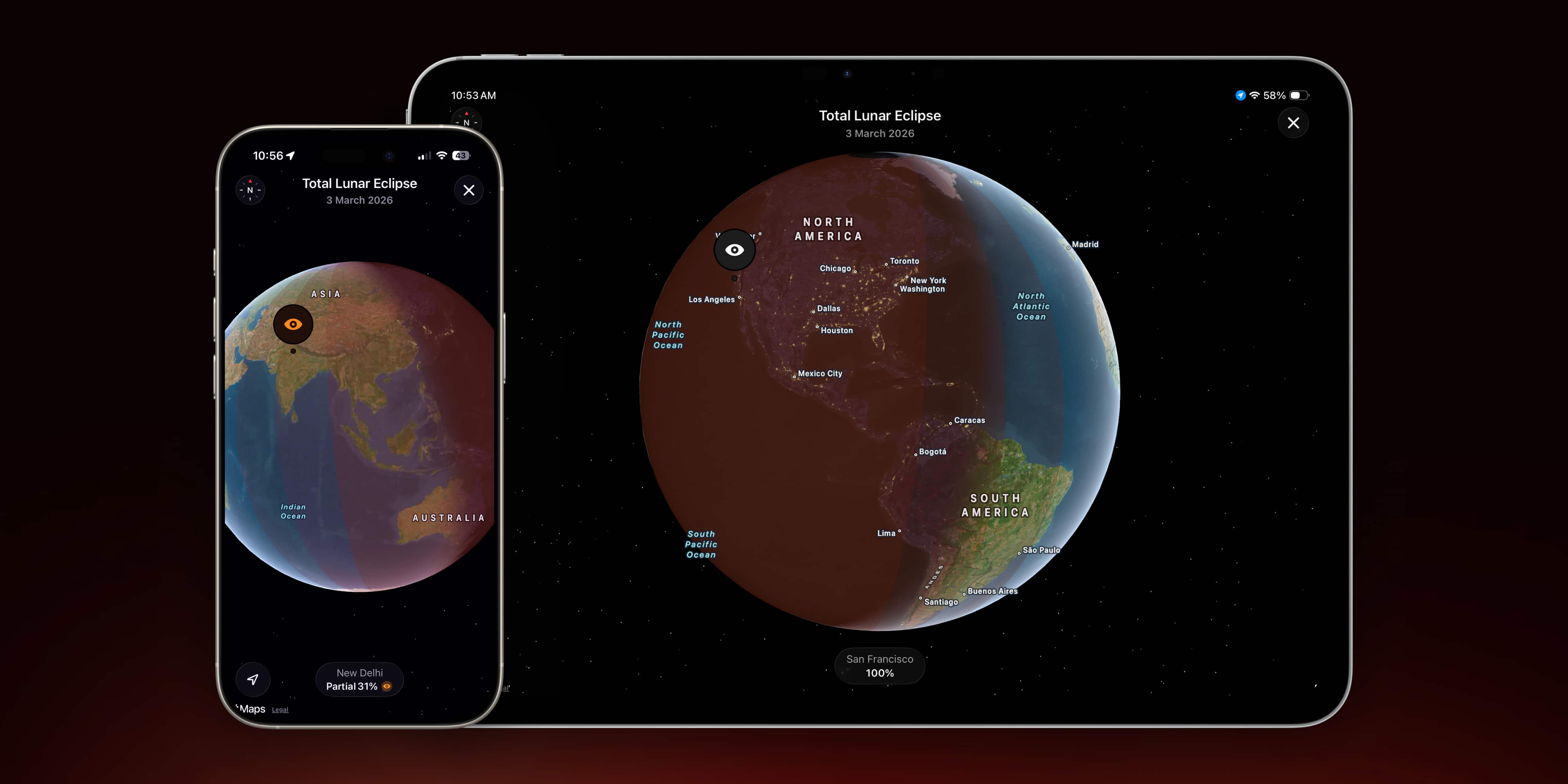
Moonlitt's March 3 Total Lunar Eclipse Map
When and how much of the eclipse you can see depends on whether the Moon is above your local horizon at the key phases. That’s why timing matters and it changes with location.
How Long Does the Eclipse Last?
A total lunar eclipse unfolds slowly, often over the course of several hours from the first touch of Earth’s shadow to the final exit. Totality itself typically lasts close to an hour, giving the Moon plenty of time in its deepest phase.
That long duration is what makes lunar eclipses so forgiving. There is no single perfect minute you must catch. You can step outside, watch the shadow progress, go back in, and return again without missing the experience.
How to Watch the March 3, 2026 Eclipse
Watching a lunar eclipse is simple. You can observe it safely with your eyes, no filters or protection required. Binoculars or a small telescope can enhance the color and surface detail, but they are optional. In most cases, a clear view of the Moon matters more than perfectly dark skies.
For the best experience, choose a location with an unobstructed view of the horizon in the direction where the Moon will be. Give your eyes a few minutes to adjust to the darkness, then take your time watching the shadow move and the color deepen during totality. The change is gradual, which makes it easy to appreciate.
If clouds move in, flexibility helps. A total lunar eclipse lasts long enough that short breaks in cloud cover can still give you a clear look.
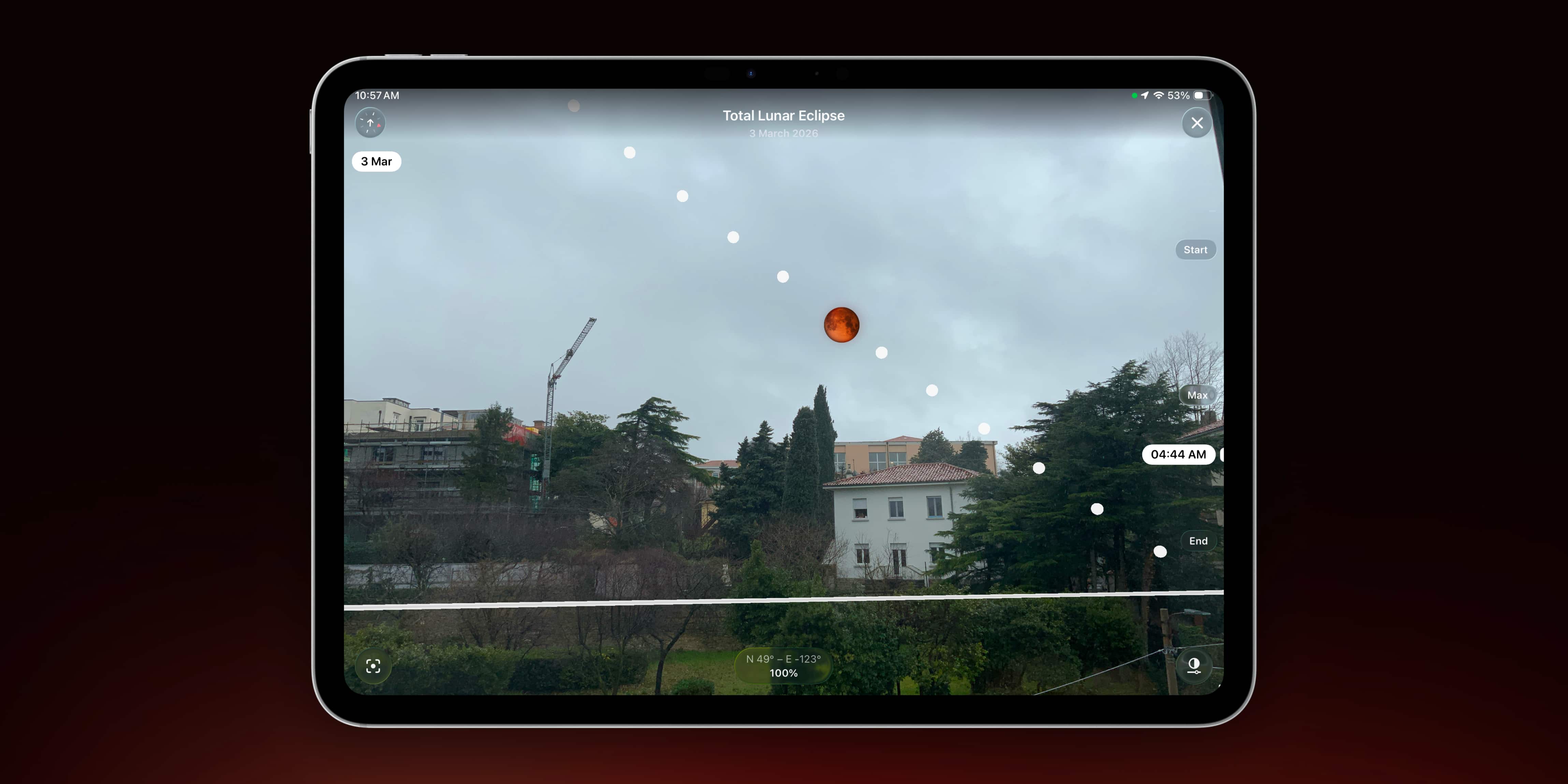
Moonlitt can also help you preview the Moon’s position using AR, so you can check in advance that no buildings, trees, or terrain will block your view at the key moments.
*also available on iPhone
Why This Eclipse Is Worth Watching
A total lunar eclipse is one of the rare sky events that is both scientifically precise and easy to experience.
It reveals the scale of the Earth–Moon system in a way that feels tangible. As the Moon moves into Earth’s shadow, you are watching orbital motion and atmospheric physics play out in real time. The red glow during totality is sunlight filtered through our own atmosphere and projected onto the lunar surface.
It unfolds slowly. There is no urgency, no special equipment required, and no single second you must catch.
On March 3, 2026, the Moon will carry the imprint of Earth’s shadow across its face. If it rises above your horizon, even a short look outside is enough to witness that alignment for yourself.
Frequently Asked Questions (FAQ)
Is it safe to watch a total lunar eclipse?
Yes. Lunar eclipses are completely safe to watch with the naked eye. No filters or eye protection are needed.
Do I need special equipment?
No. Binoculars or a telescope are optional, not required. They can enhance surface detail and make the red tones appear richer, but the eclipse is fully visible without them. Moonlitt can help you plan the exact timing and position of the Moon, which often matters more than equipment.
Why does the Moon turn red instead of disappearing?
Because sunlight is filtered through Earth’s atmosphere and bent toward the Moon. Shorter blue wavelengths scatter away, while red and orange light continues through and softly illuminates the lunar surface during totality.
Will everyone see the same color?
No. The Moon’s color can vary depending on Earth’s atmospheric conditions at the time and your local viewing conditions. Some eclipses appear brighter copper, others darker red.
How can I know if the eclipse is visible from my location?
A lunar eclipse is only visible if the Moon is above your horizon during its key phases. Check local visibility and exact timings in Moonlitt to see what is observable from where you are.
When is the next lunar eclipse?
Lunar eclipses happen a few times each year, but visibility depends on your location. You can check upcoming eclipses in Moonlitt App to see which ones will be visible from where you are.
Plan Your View
Visibility and timing depend entirely on where you are. A total lunar eclipse is only visible if the Moon is above your horizon during its key phases, which means the experience can look very different from one location to another.
Moonlitt helps you confirm whether the March 3, 2026 eclipse is visible from your location, see the exact local start times for each phase, and check when totality happens in your sky. You can also preview the eclipse before it begins, so you know what to expect.
A little planning is enough to turn this slow, quiet event into something easy and rewarding to watch.
February 12, 2026