Deep Partial Lunar Eclipse on August 27-28, 2026
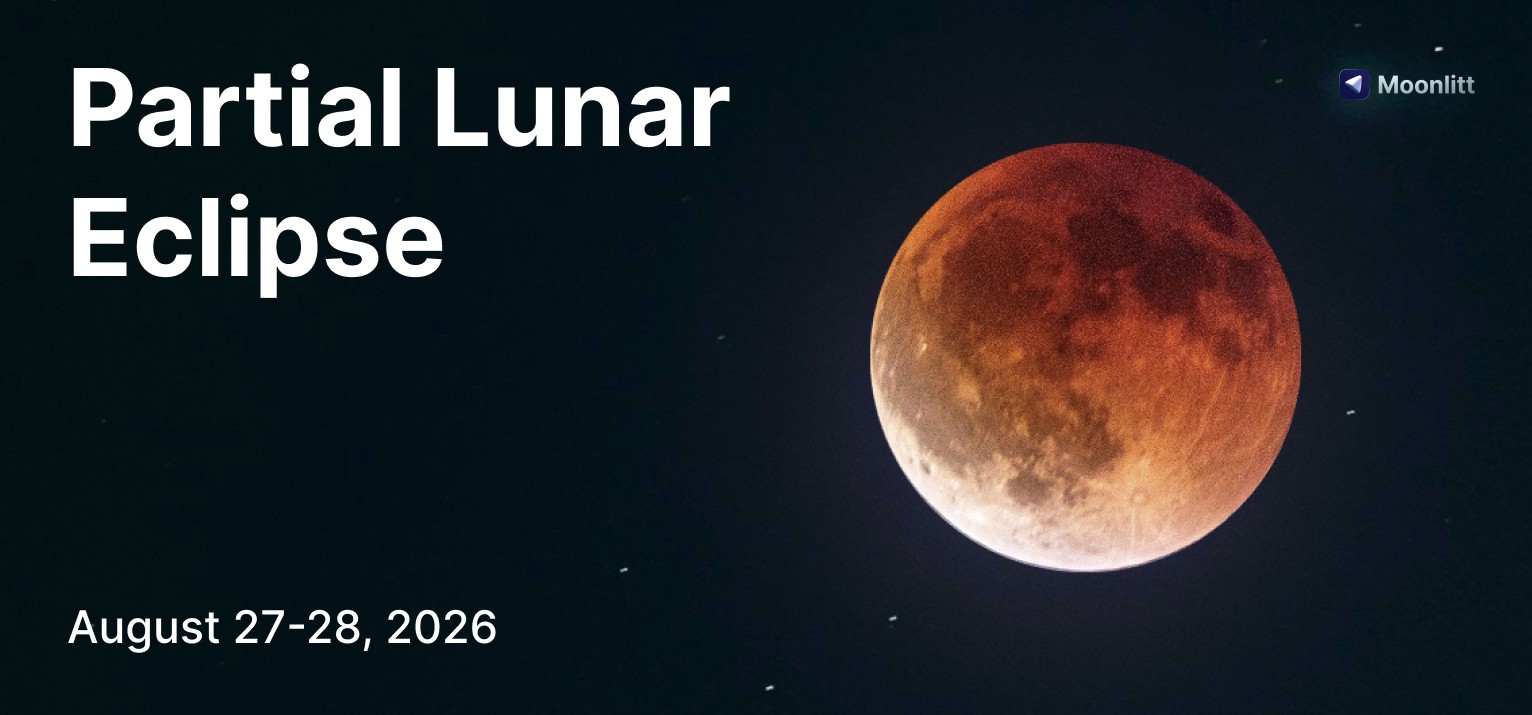
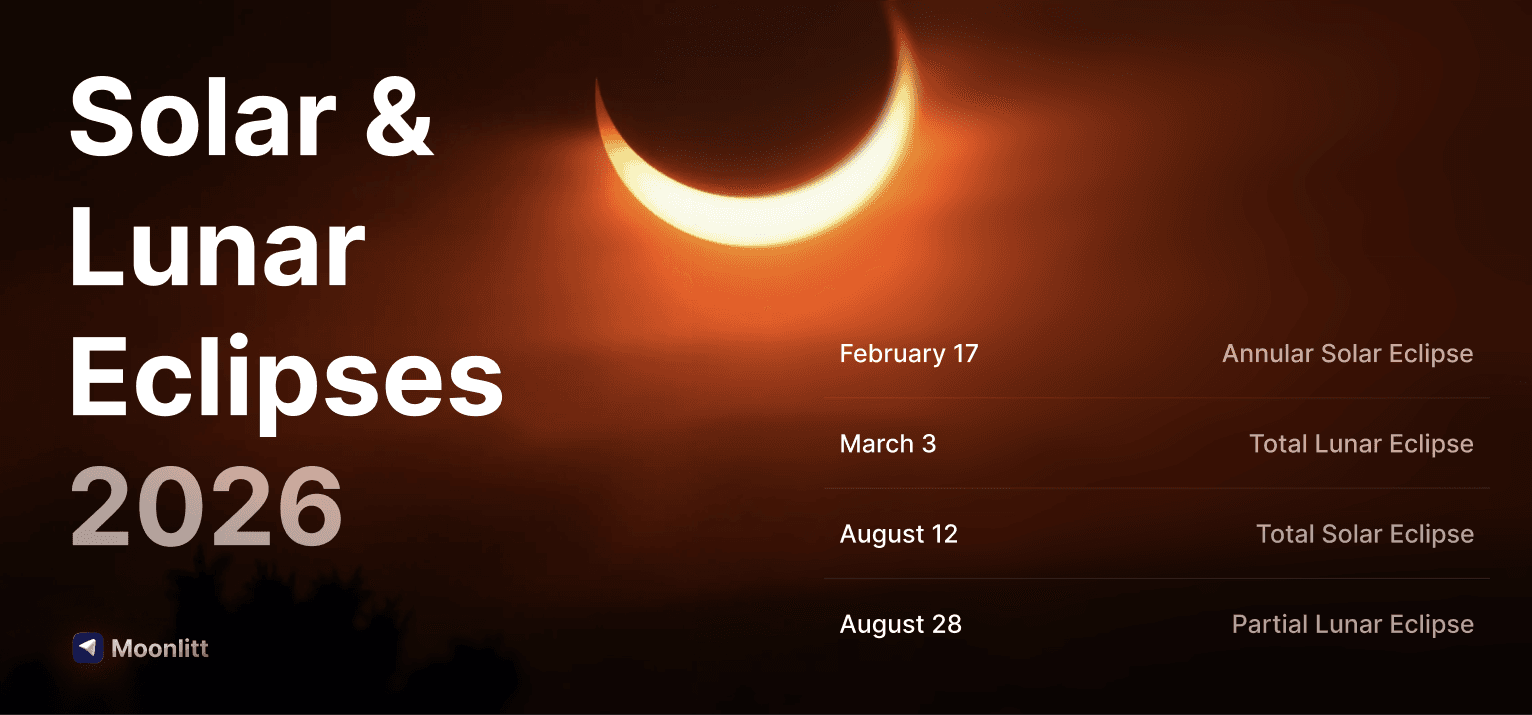
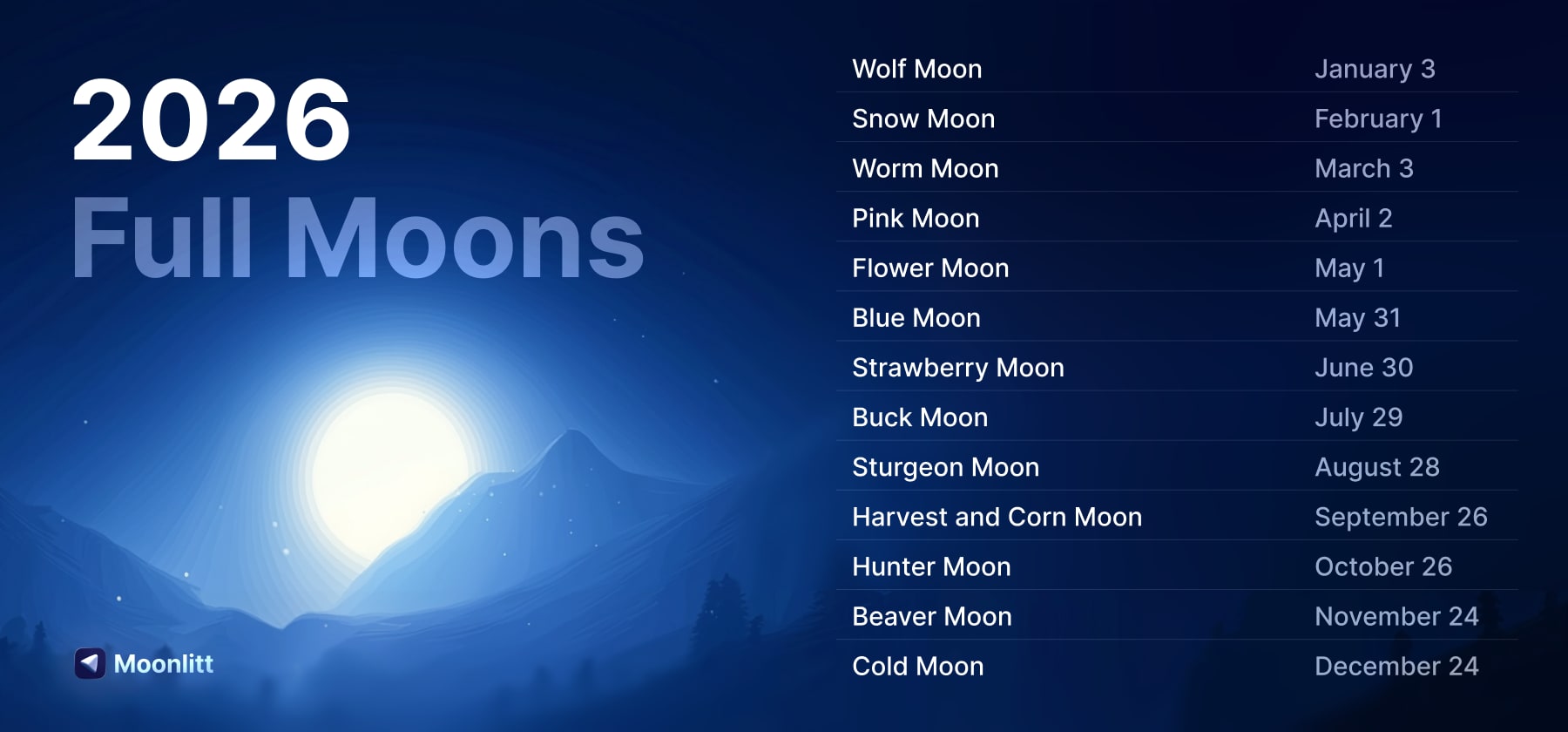
On August 28, 2026, the full Moon will pass partly into Earth’s darkest shadow, resulting in a deep partial lunar eclipse.
This eclipse will be widely visible across North and South America, with partial visibility in parts of Europe, Africa, and nearby regions depending on local moonrise, moonset, and the timing of the event.
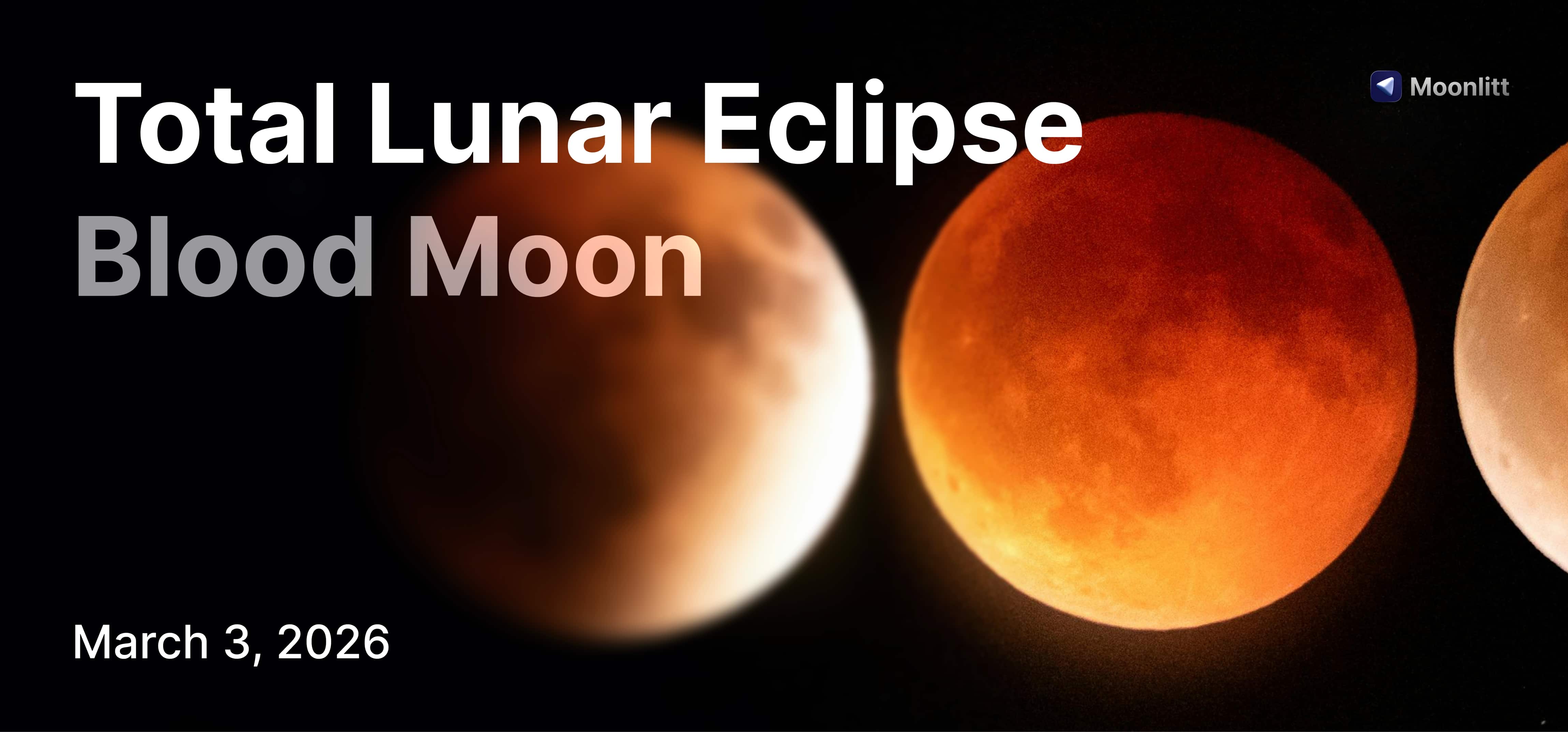
Unlike the total lunar eclipse in March 2026, this one will not bring the entire Moon into the umbra: but it comes really close.
At maximum eclipse, most of the Moon will be inside Earth’s dark central shadow, making this a dramatic partial eclipse rather than a faint one.
What is a Partial Lunar Eclipse?
A partial lunar eclipse happens when:
The Moon is full
Earth lines up between the Sun and the Moon
Only part of the Moon moves into Earth’s darkest shadow, called the umbra
Unlike a total lunar eclipse, the Moon does not pass fully inside the umbra. One section of the Moon darkens deeply while the rest remains in weaker outer shadow or direct sunlight.
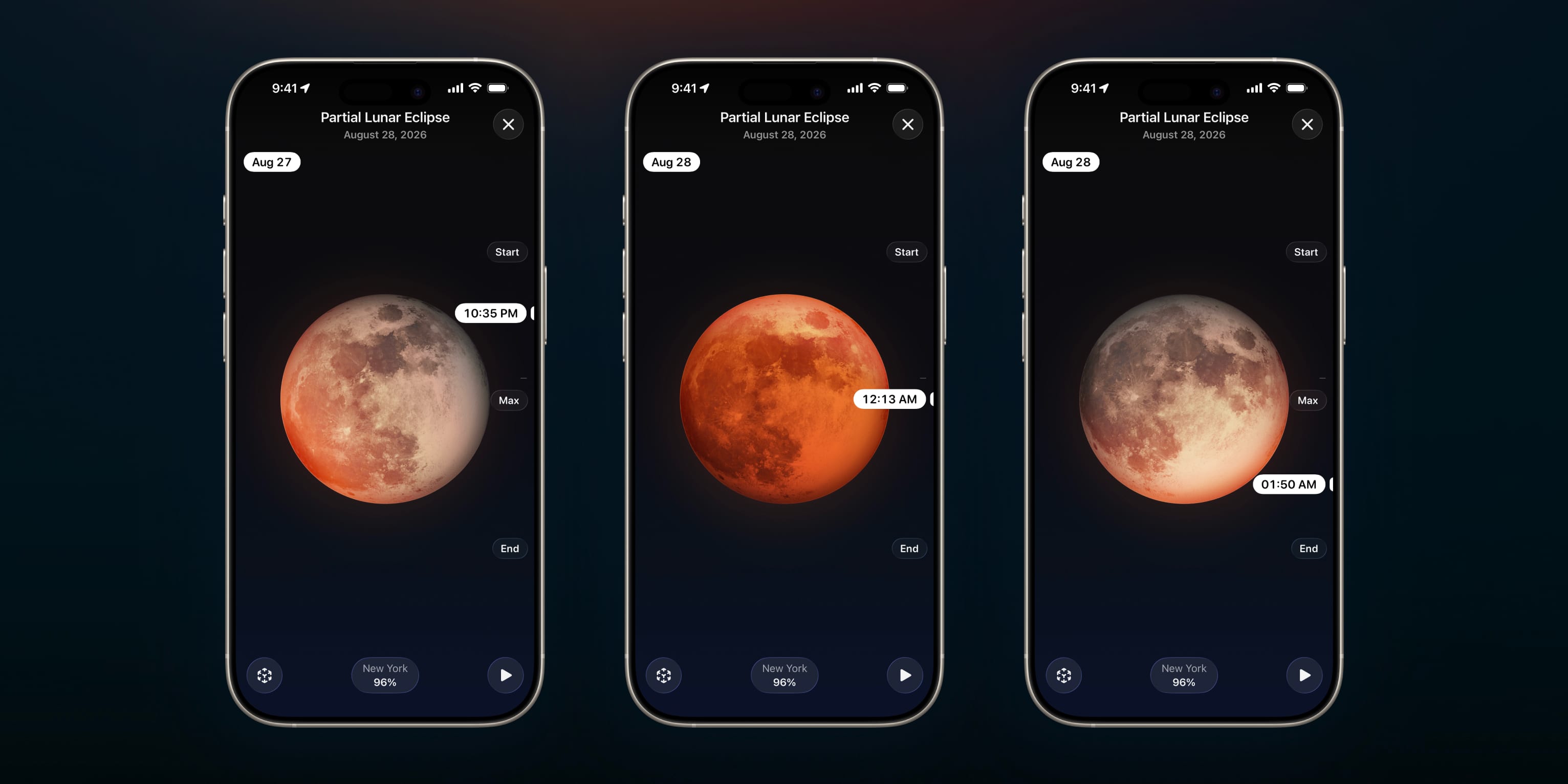
Moonlitt's preview of the August 28 Partial Lunar Eclipse
Even though this eclipse is not total, it can still look striking. The umbral shadow often appears as a curved, dark bite crossing the lunar disk. Near the deepest phase, the shadowed part can look charcoal gray, rusty red, or brownish depending on atmospheric conditions and how deep the Moon enters the shadow.
Moonlitt can help you forecast how deep the partial phase gets in your sky and when the key moments happen locally.
Why this Eclipse is not considered a Blood Moon
August 2026 lunar eclipse is so deep that it sits close to the line between partial and total in terms of appearance.
It will not be a Blood Moon in the usual sense, because the whole Moon never reaches totality. But near maximum eclipse, the shadowed portion may still show some reddish or copper tones.
Read more here…
When and where the Eclipse is visible
The August 28, 2026 eclipse will be fully visible across much of the Americas, while observers in parts of Europe and Africa may see only some phases, often near moonset. Visibility depends on your position relative to the local horizon during each phase.
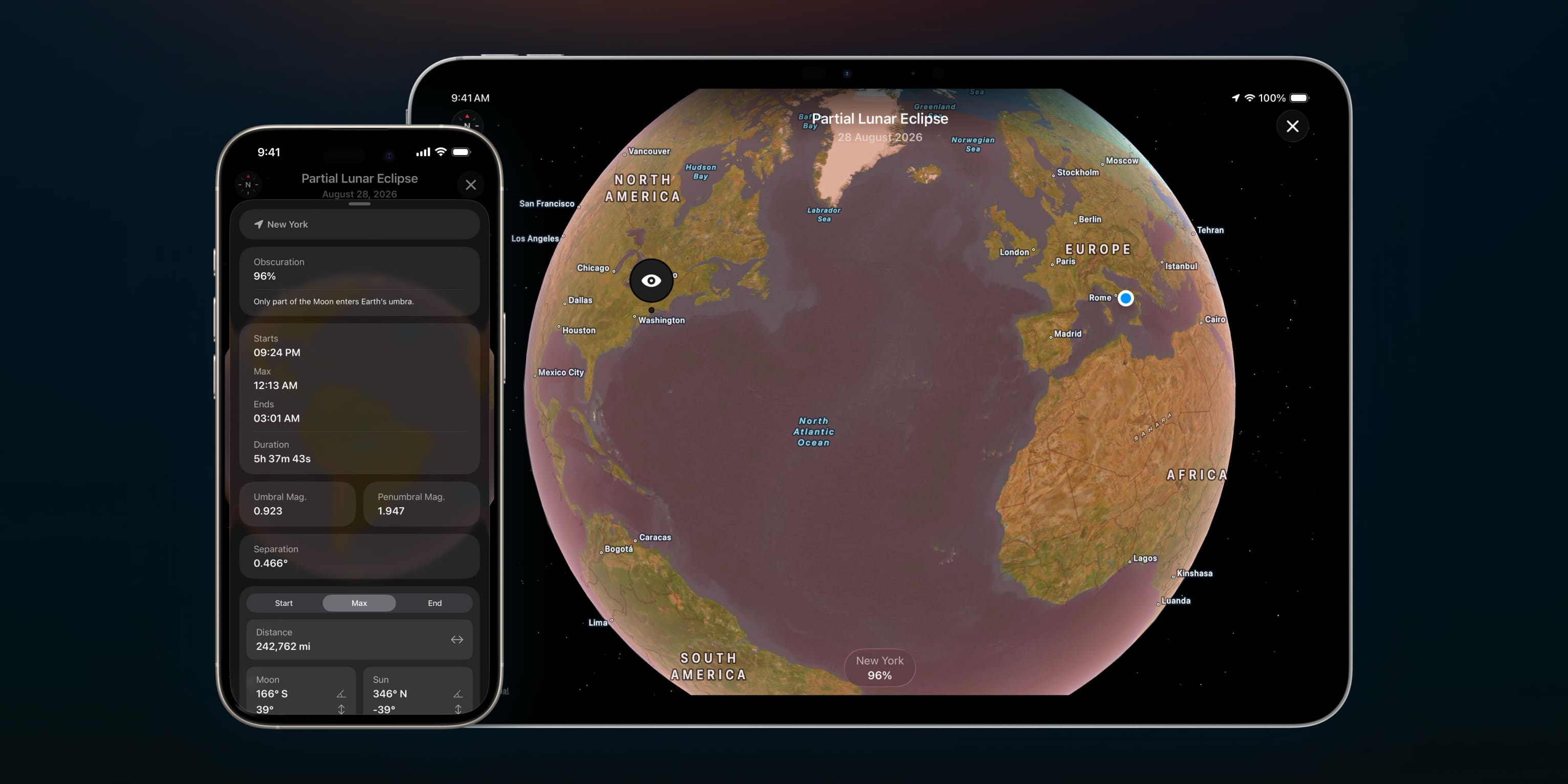
Moonlitt eclipse map helps you check whether the eclipse is visible from your location.
When and how much of the eclipse you can see depends on whether the Moon is above your local horizon during the key phases. That is why timing matters, and why the experience changes from one location to another. For example, in Italy, the eclipse occours near dawn, with the Moon low and setting during the later stages.
How long does the Partial Lunar Eclipse last?
A partial lunar eclipse unfolds slowly. The penumbral phase begins first, then the Moon starts to enter the umbra, reaches maximum eclipse, and gradually moves back out.
For this event, the partial phase lasts about 3 hours: that long duration makes lunar eclipses easy to fit into real life. The change is gradual. You can step outside, watch the shadow progress, go back in, and return later without missing the whole event.
How to watch the August 28, 2026 Lunar Eclipse
Watching a lunar eclipse is simple. Since you are watching just the Moon reflecting sunlight, you can observe it safely with your eyes, and no filters or protection are needed. Binoculars or a small telescope can make the shadow edge and color differences easier to see, but they are optional.
For the best experience, choose a location with a clear horizon in the direction where the Moon will be during the eclipse. That matters especially if the event happens low in the sky from your location, either near moonrise or moonset.
In many parts of Europe and Africa, local visibility may depend on having a clean western horizon before dawn.
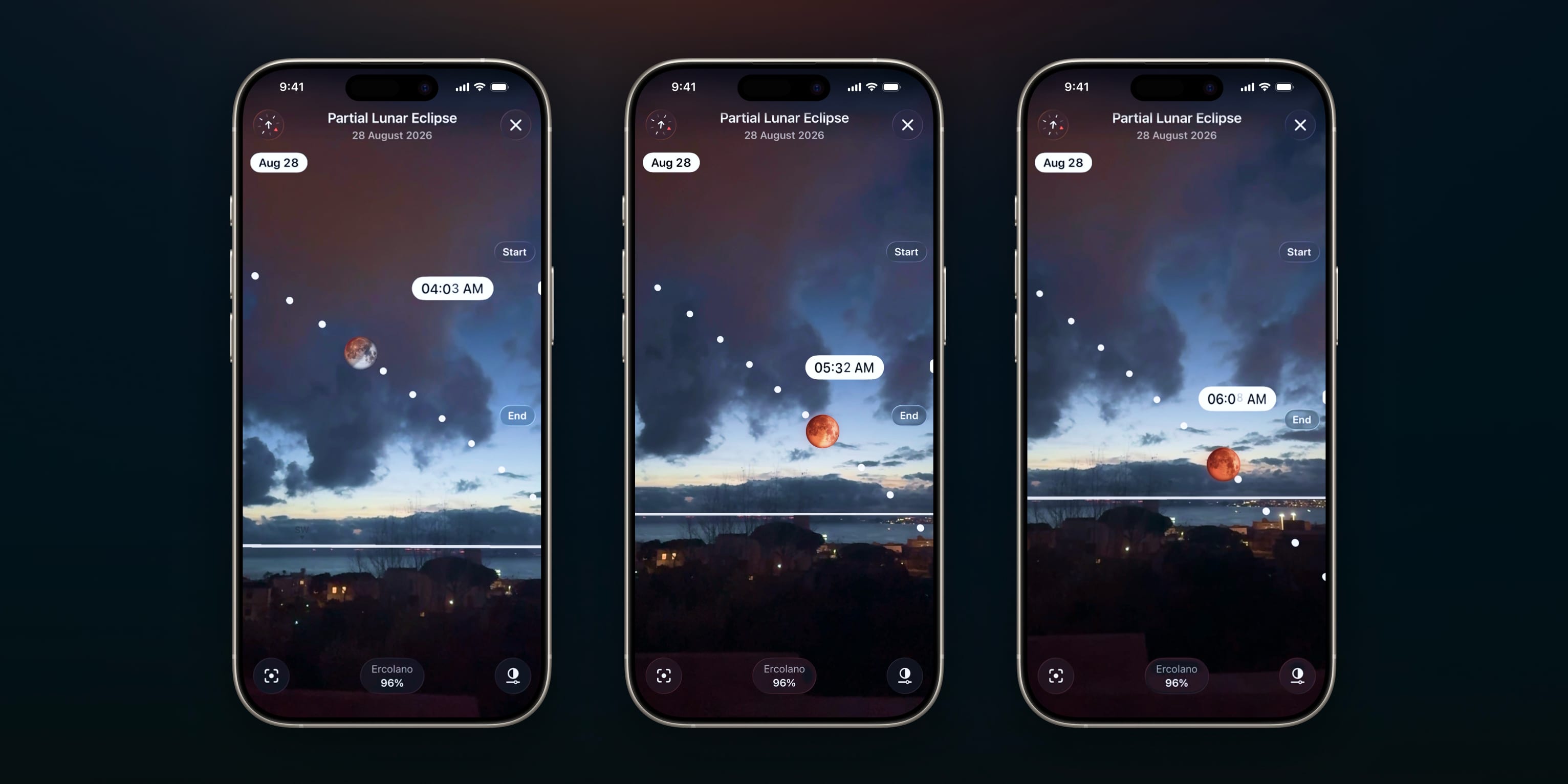
Moonlitt can also help you preview the eclipse position using AR, so you can check in advance that buildings, trees, or terrain will not block your view at the key moments.
Why this Eclipse is worth watching
On August 28, 2026, the Moon will come close to totality without fully reaching it. That makes this eclipse worth a look. The bright remaining section of the Moon and the deeply shadowed portion will appear side by side, which can make the whole event feel crisp, dramatic, and easy to read even without equipment.
Spiritual or astrological meaning of the August 28, 2026 Partial Lunar Eclipse
For some people, a deep partial lunar eclipse feels symbolic as well as visual.
Spiritually, lunar eclipses are often linked with release, clarity, and emotional shift. Because this one is so deep, it can feel like a moment of contrast, where something hidden becomes easier to notice.
In astrology, the August 28, 2026 partial lunar eclipse is associated with a Full Moon in Pisces, a sign often linked with intuition, emotion, imagination, and letting go. That gives this eclipse a meaning often tied to closure, reflection, and the space between fantasy and reality.
This meaning is interpretive, not scientific. The astronomy is measurable. The symbolism is personal. But for people who connect with that layer, this eclipse can feel like a quiet moment to release what has run its course and pay attention to what feels clearer afterward.
Frequently Asked Questions (FAQ)
Is it safe to watch a partial lunar eclipse?
Yes. Lunar eclipses are completely safe to watch with the naked eye. No filters or eye protection are needed.
Do I need special equipment?
No. Binoculars or a telescope are optional, not required. They can make the shadow edge clearer and help you notice subtle color differences, but the eclipse is fully visible without them.
Will the Moon turn red?
Not completely. The Moon will not take on the full Blood Moon look of a total eclipse, but only part of the Moon may appear reddish. You can forecast this using Moonlitt's eclipse section.
Why is this called a deep partial eclipse?
Because the Moon goes deep into Earth’s umbra without fully entering it.
How can I know if the eclipse is visible from my location?
A lunar eclipse is only visible if the Moon is above your horizon during its key phases. Check local visibility and exact timings in Moonlitt to see what is observable from where you are.
When is the next eclipse?
This is the last eclipse for 2026, however they happen frequently. Check Moonlitt's eclipse section to discover which eclipses 2027 has in store for us.
April 17, 2026