Total Solar Eclipse on August 12, 2026
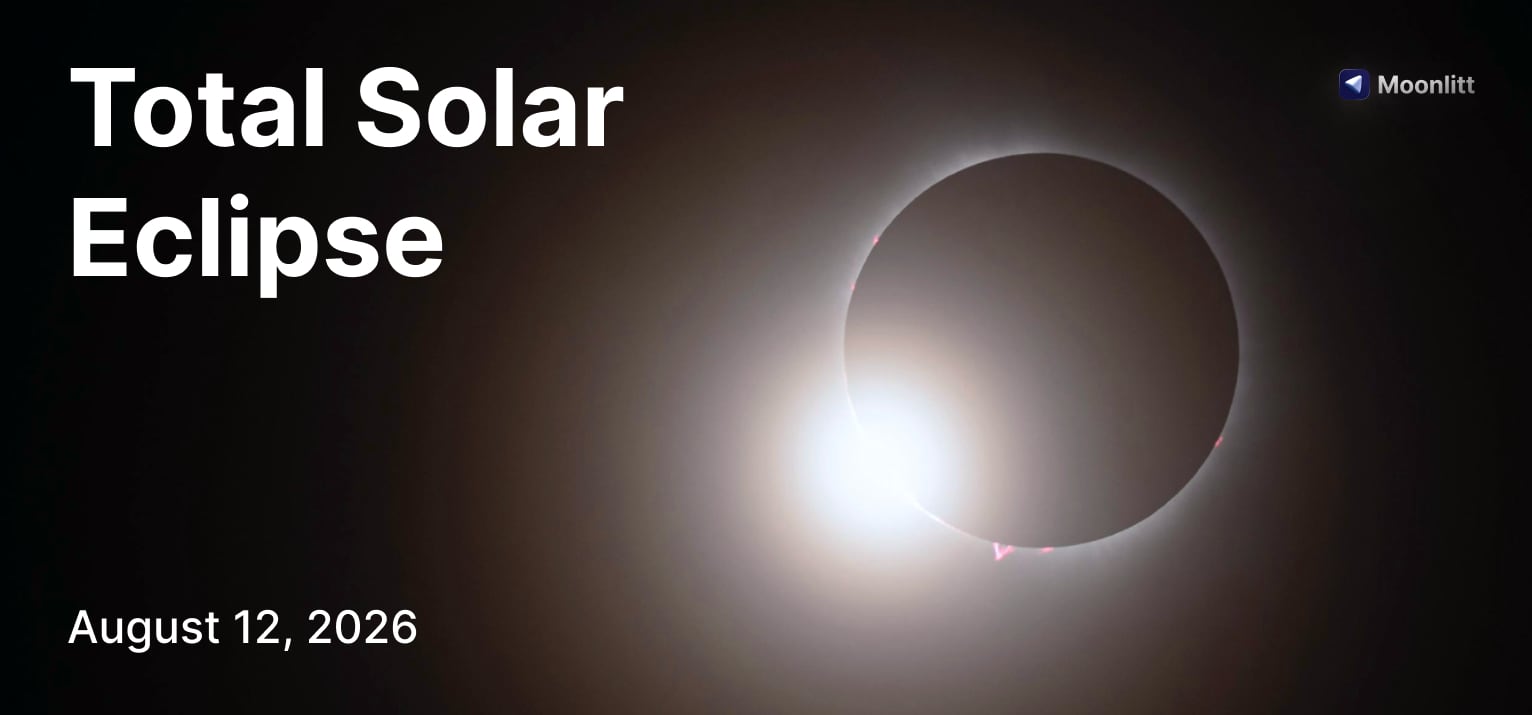
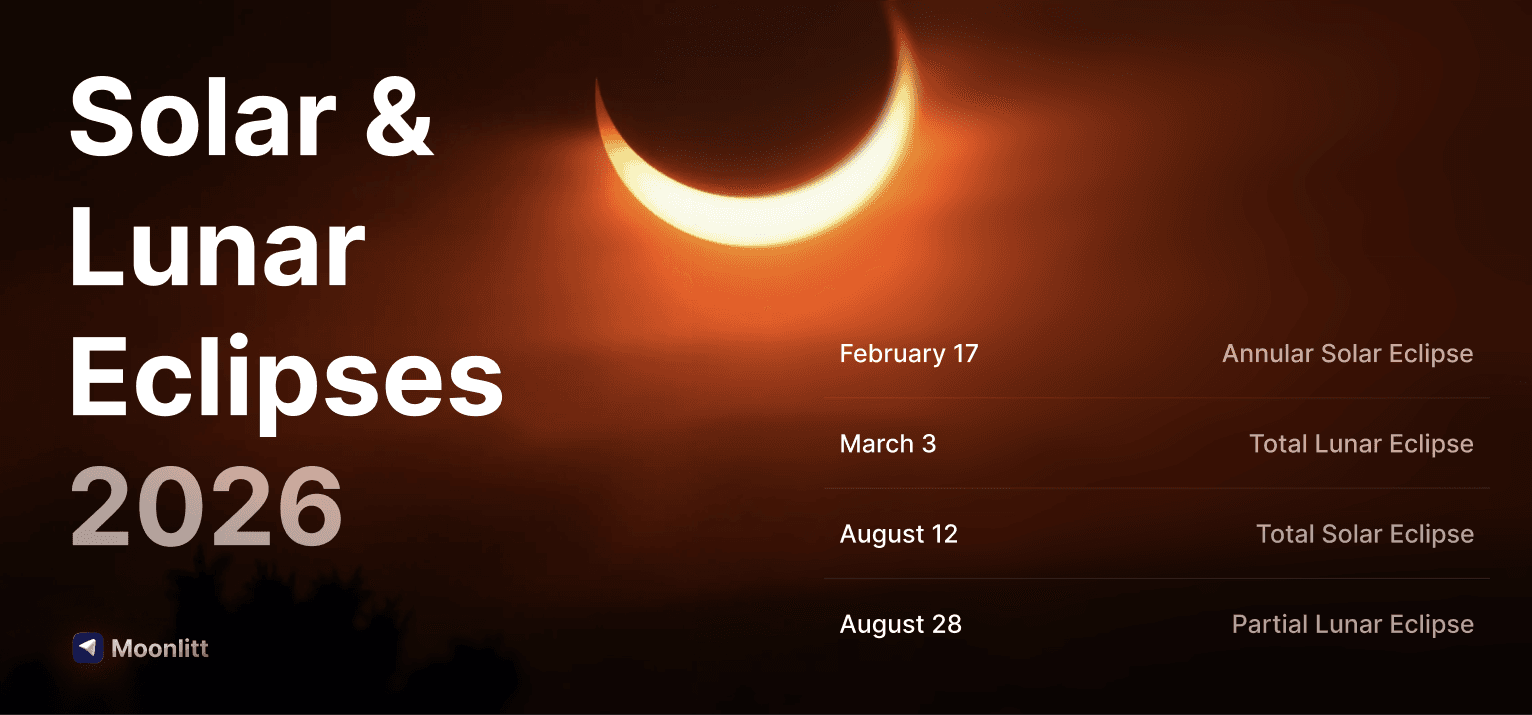
On August 12, 2026, the Moon will pass directly in front of the Sun in a total solar eclipse. Along the narrow path of totality, the Sun will be completely covered for a brief time, turning day into twilight and revealing the solar corona.
Totality will cross parts of Greenland, Iceland, and Spain around sunset. Outside that path, a much wider region across Europe, parts of Africa, the North Atlantic, and nearby areas will see a partial eclipse instead.
This is not a relaxed, glance-up kind of sky event. Solar eclipses are stunning, but they need planning. For every phase, you must use proper solar viewing protection.
What is a Total Solar Eclipse?
A total solar eclipse happens when:
The Moon moves between Earth and the Sun
The alignment is exact enough for the Moon to fully cover the Sun’s bright disk
The observer is located inside the Moon’s umbral shadow, where totality occurs
The alignment drifts as we move away from that narrow track. In those places, the Moon covers only part of the Sun, creating a partial eclipse instead of totality.
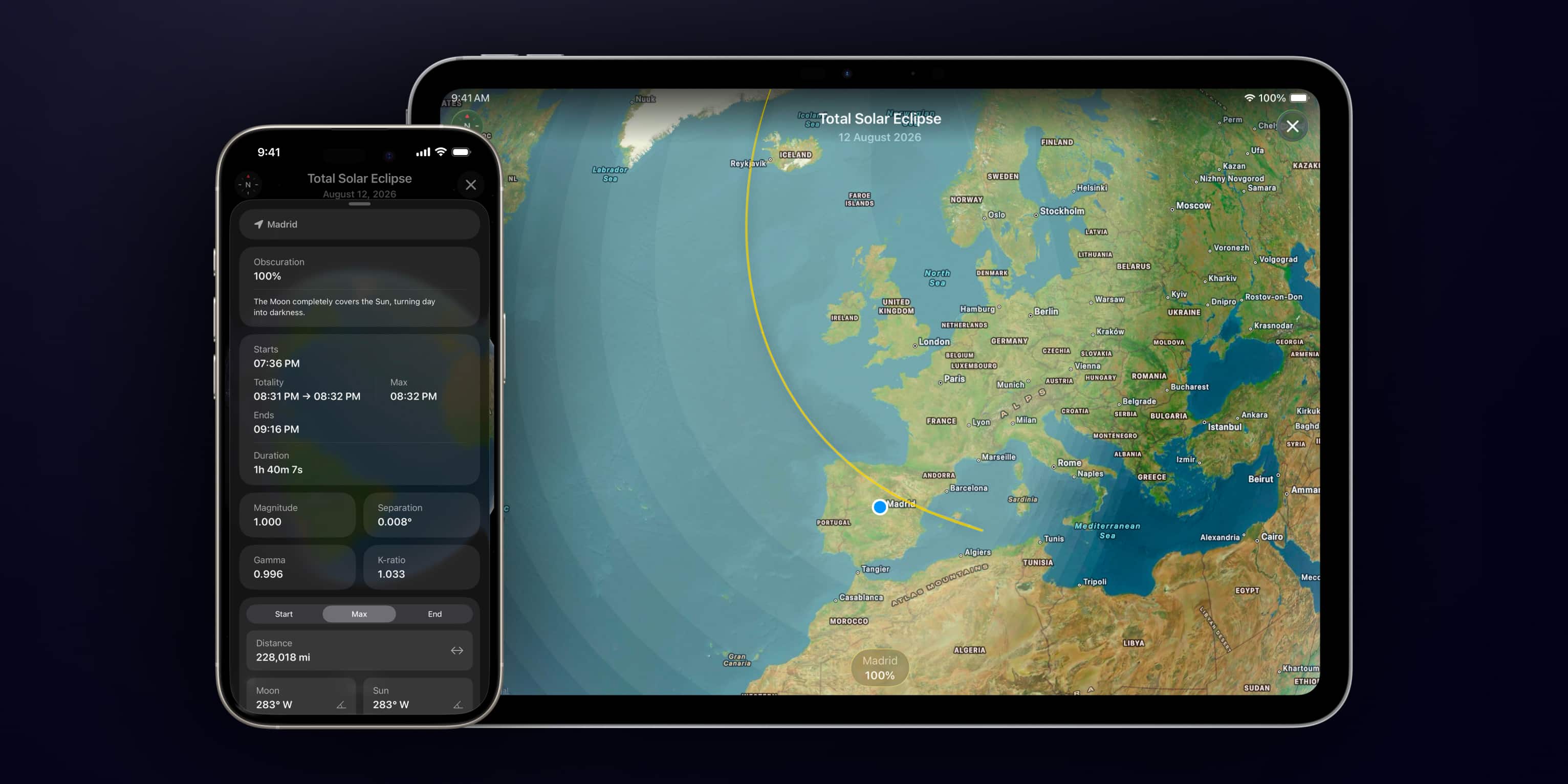
Moonlitt's August 12 Total Solar Eclipse Visibility Map
What makes a total solar eclipse special is the difference between partial eclipse and totality. During the partial phases, the Sun still looks intensely bright and must be viewed with certified solar filters. During totality, the covered Sun reveals features that are normally hidden by glare, especially the corona, the Sun’s faint outer atmosphere.
Why the Eclipse looks so special
A total solar eclipse is one of the few moments when the sky changes visibly in real time. As the Moon covers more of the Sun, daylight dims, shadows sharpen, and the landscape can take on an unusual gray tone. Then, during totality, the corona appears around the darkened Sun as a pale, structured halo.
Depending on where you are and how clear the sky is, you may also notice bright planets or stars, a drop in temperature, and the horizon glowing as if sunset is happening in every direction at once.
Every total solar eclipse has its own character. The height of the Sun, the duration of totality, local weather, and your position within the eclipse path all shape the experience.
In August 2026, the eclipse will be relatively low in the sky from Spain and Europe, which makes horizon planning especially important there. Moonlitt can help you in finding precise times and best spots for witnessing the event.
When and where the Eclipse is visible
Whether you see totality, a deep partial eclipse, or nothing at all depends entirely on location. A city just outside the path will not get totality, even if most of the Sun is covered. That difference matters. Totality is a completely different event from a partial eclipse, both visually and in terms of safe viewing.
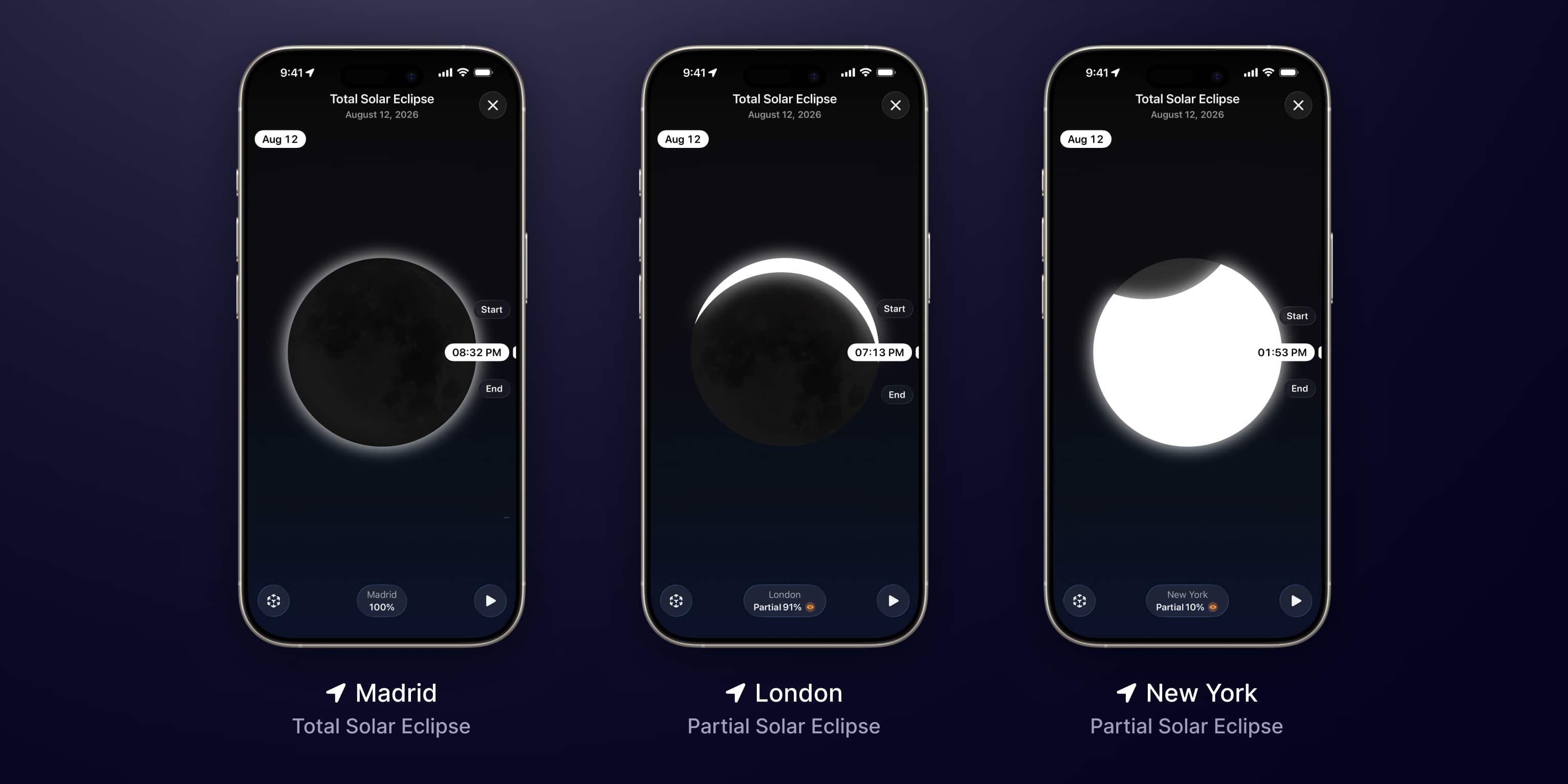
Moonlitt eclipse page helps you check exactly what is visible from your location.
How Long Does the Eclipse Last?
The full eclipse event, from the first partial phase to the last, lasts several hours globally. But the part most people care about, totality, is short. In many places along the center line, totality lasts only around one to two minutes. Some locations can even get less.
That short duration is part of what makes total solar eclipses so memorable. Unlike a lunar eclipse, which unfolds slowly and gives you time to step away and come back, a solar eclipse builds gradually and then reaches its most dramatic phase very quickly. Timing matters much more here.
How to watch the August 12, 2026 Eclipse
Watching a solar eclipse safely starts with one rule: use proper solar viewing protection during every partial phase. Regular sunglasses are not safe. Neither are cameras, binoculars, or telescopes unless they are fitted with proper solar filters designed for front-mounted solar viewing.
If you are inside the path of totality, you may remove your eclipse glasses only after the Sun is fully covered. The moment even a small bright edge of the Sun reappears, eye protection must go back on immediately. If you are outside the path of totality, protection must stay on for the entire eclipse.
For the best experience, choose a viewing spot with a clear horizon in the direction of the Sun and Moon. This matters even more for the August 2026 eclipse in parts of Spain, where the eclipsed Sun will be low late in the day. Trees, buildings, hills, and haze near the horizon can easily block the view.
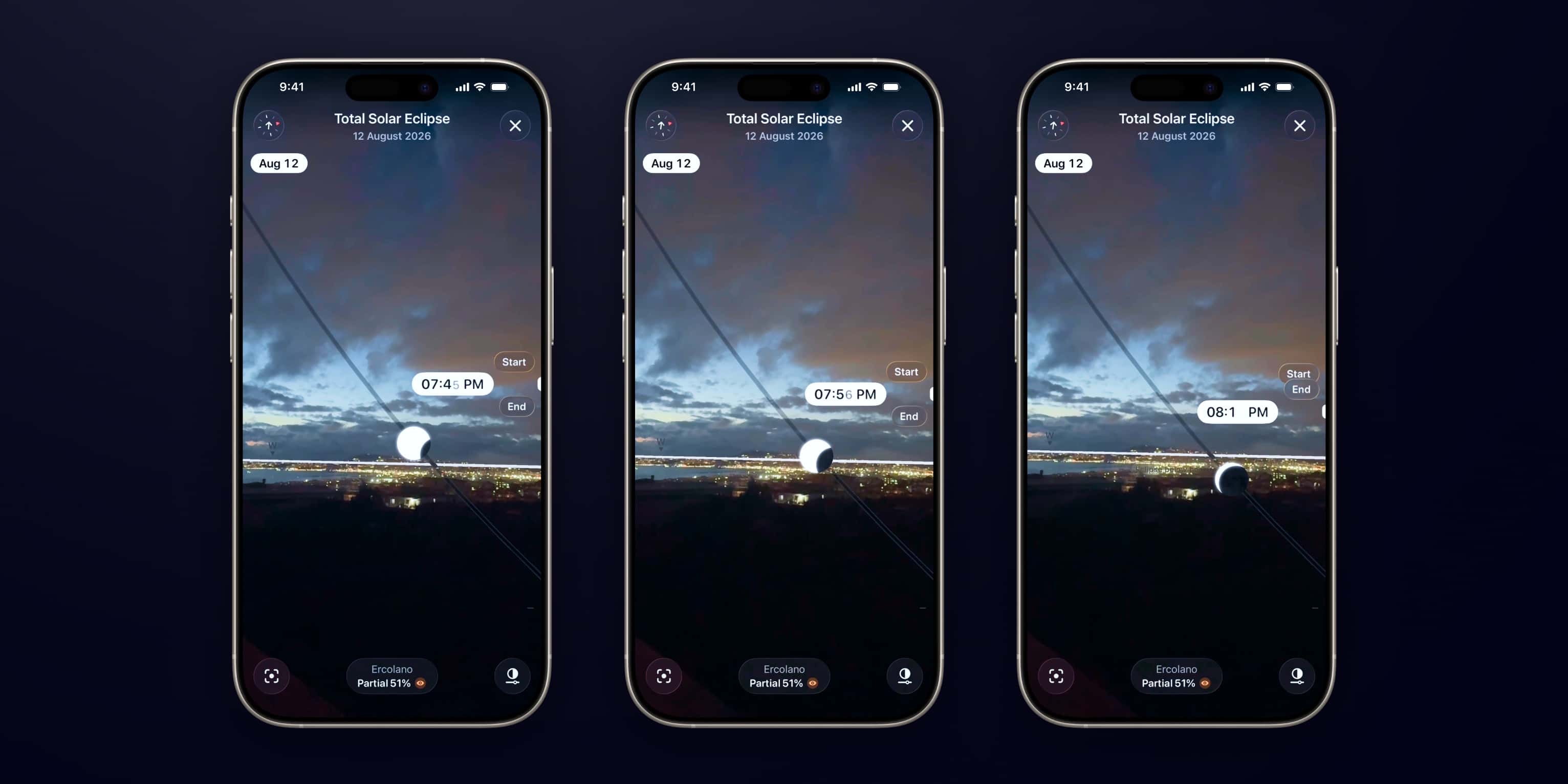
Moonlitt can help you check the Eclipse position in advance, preview the alignment with AR, and make sure your chosen spot will actually have a clean line of sight at the key moments.
Why this Eclipse is worth watching
A total solar eclipse is one of the clearest ways to see orbital geometry become something physical. The Moon and Sun appear almost the same size in our sky, and on rare dates that alignment becomes exact enough for the Moon to cover the solar disk completely.
It is also one of the most location-sensitive sky events.
A short drive can be the difference between a dramatic total eclipse and a partial one. That makes planning part of the experience, not an extra step around it.
Spiritual or astrological meaning of the August 12, 2026 Total Solar Eclipse
For some people, a total solar eclipse feels symbolic as well as astronomical.
Spiritually, it is often linked with pause, reset, and perspective. The sky briefly breaks its usual pattern, which can make the moment feel reflective or emotionally charged.
In astrology, a solar eclipse is often seen as an intensified New Moon, connected with beginnings, change, and shifts in direction. The August 12, 2026 eclipse is associated with Leo, a sign often linked with self-expression, creativity, and visibility.
This meaning is interpretive, not scientific. The astronomy is measurable. The symbolism is personal. But for people who connect with that layer, this eclipse can feel like a moment to stop, reflect, and notice what is ready to change.
Frequently Asked Questions (FAQ)
Is it safe to watch a total solar eclipse?
Yes, but only with the right precautions. You must use proper solar viewing protection during all phases.
Do I need special equipment?
You need certified eclipse glasses or another safe solar viewing method. Binoculars, telescopes, and cameras require proper solar filters as well.
What is the difference between a partial eclipse and totality?
In a partial eclipse, part of the Sun remains visible, so the sky never fully darkens and eye protection is always required. In totality, the Sun is completely covered for a short time, allowing the corona to become visible.
Will everyone see the same eclipse?
No. The exact view depends on where you are. Only locations inside the narrow path of totality will see the Sun fully covered. Many surrounding regions will see only a partial eclipse. You can check the visibility preview for your position using Moonlitt app.
How can I know if totality is visible from my location?
You need to know whether your location falls inside the eclipse path and whether the Sun is clear above your local horizon at the right time. Moonlitt helps you check local visibility, phase timings, and the exact eclipse track for your position.
When is the next solar eclipse?
Solar eclipses happen regularly somewhere on Earth, but totality at any given location is pretty rare. You can check upcoming eclipses in Moonlitt to see which future events are visible from where you are.
April 17, 2026