Blue Moon May 31, 2026: What It Is, When to See It, and What It Really Means
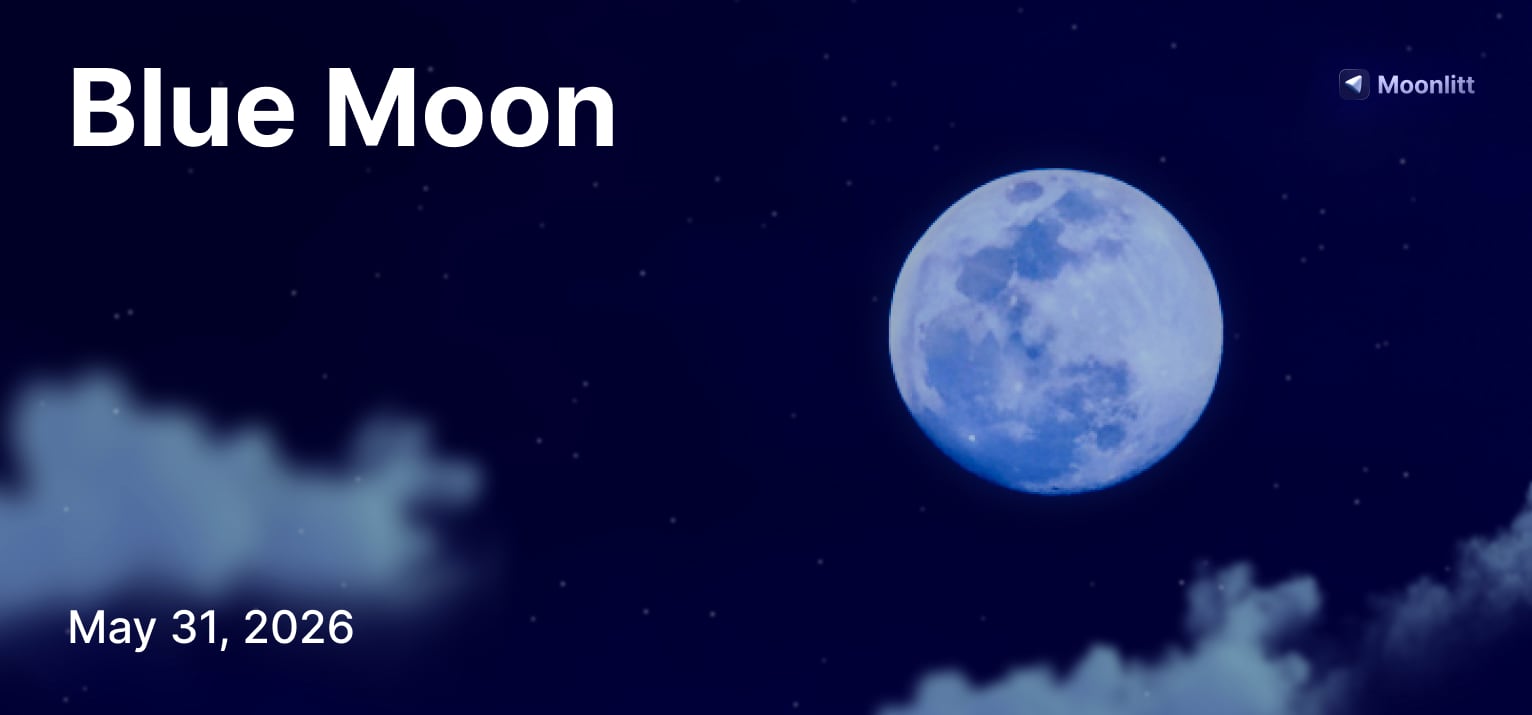
Some full moons stand out because they look bigger or brighter. Others stand out because of timing.
The May 31, 2026 Blue Moon belongs to the second group: it is the second full moon of the same calendar month, a relatively rare event that gives this full moon its name.
This one has an added twist: it is also a micromoon, meaning the Moon reaches full phase when it is near apogee, the farthest point from Earth in its orbit. It will not look dramatically different, but it may appear slightly smaller than a typical full moon, which makes this event an interesting mix of calendar coincidence and orbital geometry.
Because lunar events are always local in practice, the exact peak depends on where you are observing from. In Moonlitt, you can check the precise date and time for your location, follow the Moon’s path in the sky, and see if the weather is likely to cooperate.
What is a Blue Moon, exactly?
In everyday astronomy use, a Blue Moon is the second full moon in one calendar month. That happens because the lunar cycle is about 29.5 days, which is just short enough that a month can occasionally fit two full moons, especially if the first one lands on the 1st or 2nd.
That is exactly what happens in May 2026: the first full moon arrives on May 1 (the Flower Moon), and the second one arrives on May 31, that’s the Monthly Blue Moon.
There is also another definition you may see in astronomy references: a seasonal Blue Moon. In that usage, a Blue Moon is the third full moon in a season that has four full moons instead of the usual three.
Read more here…
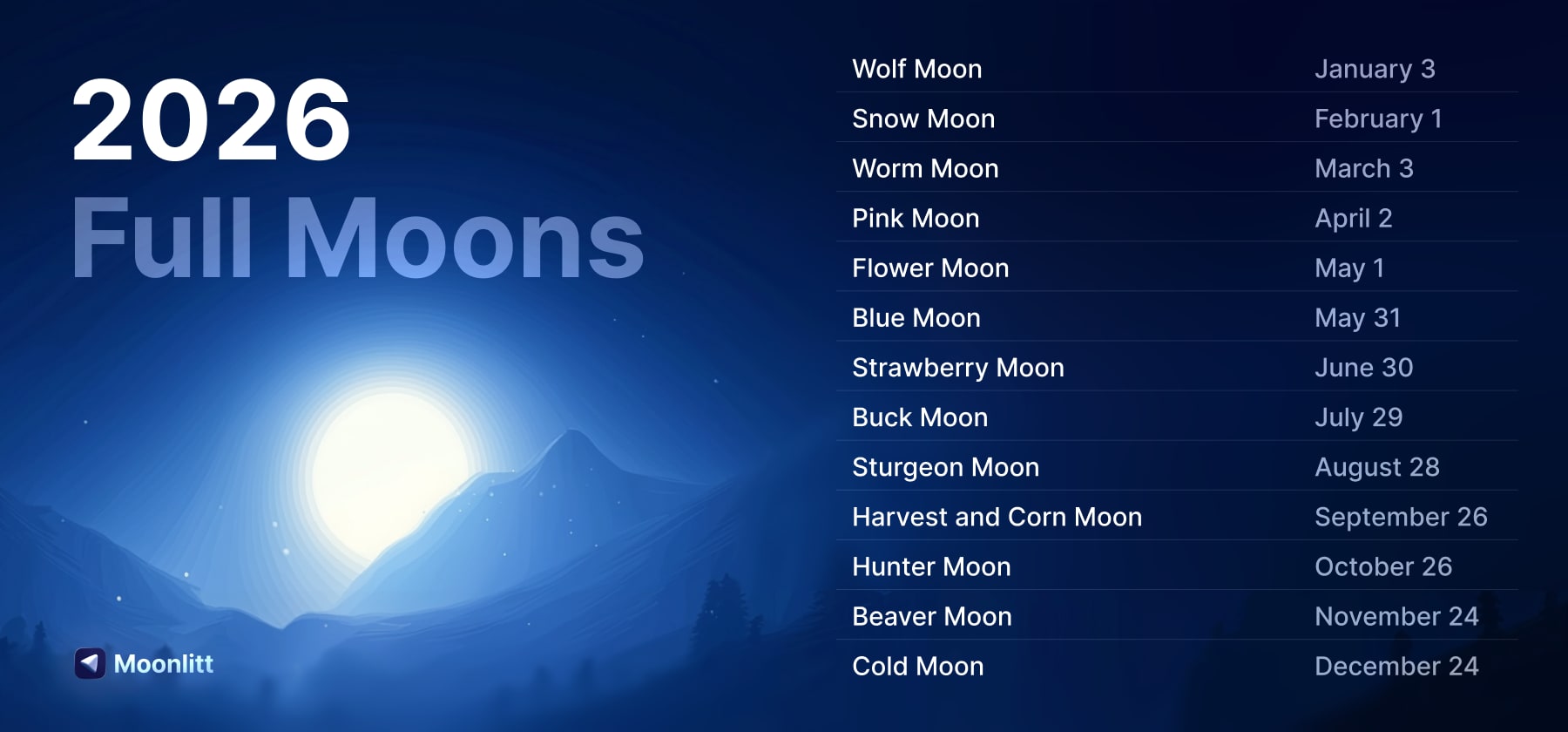
Why is it called a “Blue Moon”?
The name Blue Moon can sound a little misleading. In astronomy, it usually does not mean the Moon actually turns blue. Most of the time, a Blue Moon looks like any other full moon.
So why “blue”?
The name comes from older language and calendar traditions, not from the Moon’s color. Over time, it became a popular way to describe a rare or unusual full moon, which is also why the phrase “once in a blue moon” means something that happens very rarely.
How often does a monthly Blue Moon occur?
A monthly Blue Moon turns up about once every two to three years. That is because the Moon’s cycle and the calendar month do not line up perfectly, so an extra full moon occasionally slips into the schedule.
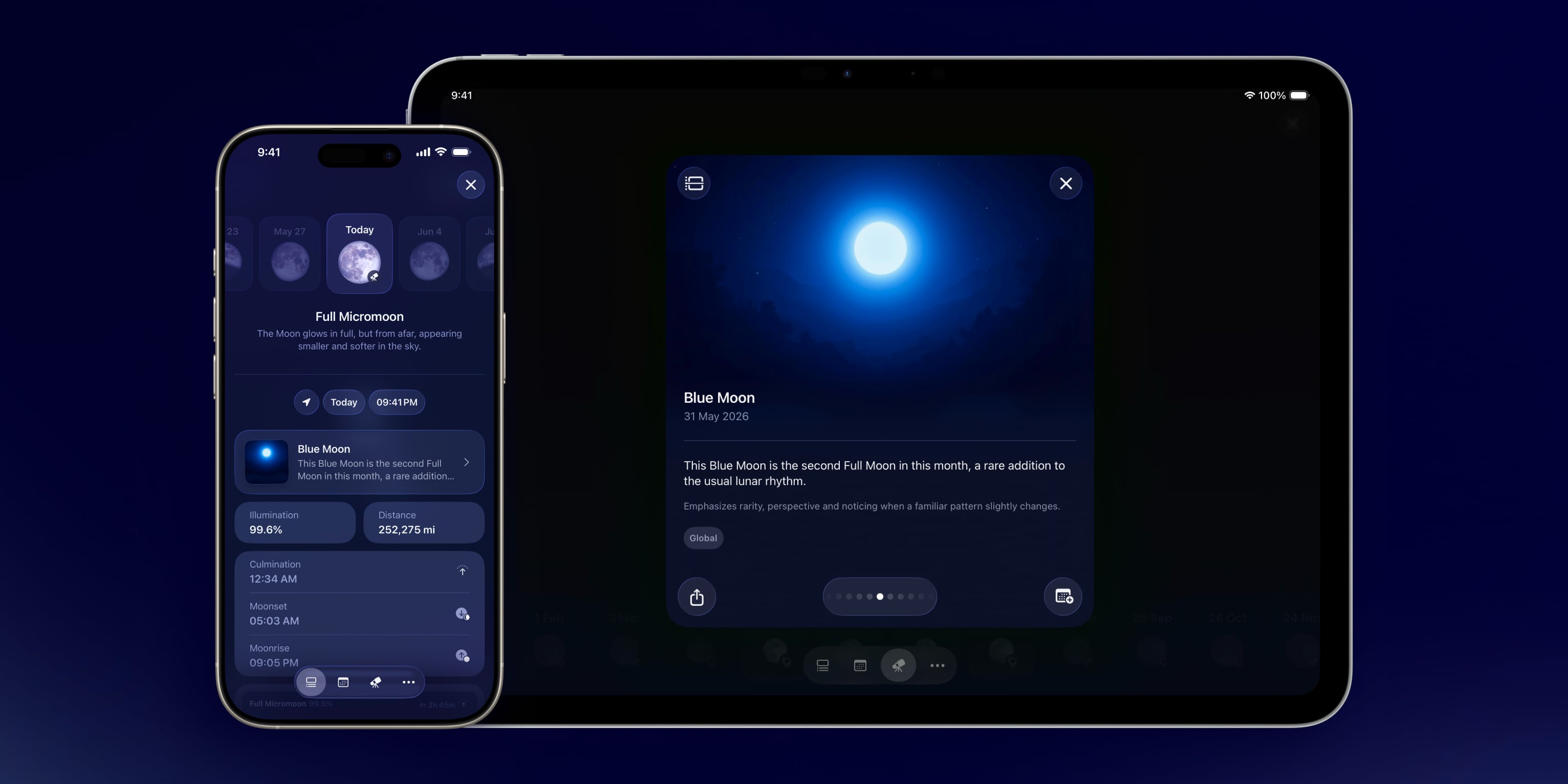
Find every monthly and seasonal Blue Moon with Moonlitt
Is the Blue Moon really blue?
Usually, no. A Blue Moon looks like a normal full moon.
A moon can appear bluish under rare atmospheric conditions, such as after major volcanic eruptions or heavy smoke, but that is a separate effect and not what the name means.
Why is the May 31, 2026 Blue Moon also a micromoon?
Because the full moon happens just before apogee on June 1, 2026, when the Moon is near the farthest point in its orbit from Earth. That does not make it tiny to the naked eye, but it can look subtly smaller than an average full moon, especially when compared with a supermoon from another month.
How can I see the Blue Moon safely?
A blue moon is safe to observe with the naked eye. You do not need eclipse glasses, filters, or any special protection because you are looking at reflected sunlight, not the Sun itself. For the nicest view:
Find a spot with a clear eastern horizon for moonrise
Check cloud cover first
Look when the Moon is low if you want it to appear bigger next to buildings or trees
Bring binoculars if you want more detail on the lunar surface
With Moonlitt, you can track the Moon’s path, check cloud cover, and pick the best viewing spot for your needs.
How do I photograph the Blue Moon with my phone or camera?
Keep it simple!
With a phone:
Use a tripod or steady support
Tap the Moon to focus
Lower exposure a bit so the Moon is not a white blob
Include foreground like rooftops, trees, or a hill
With a camera:
Use a longer lens if you have them
Start with a low ISO
Use a fast enough shutter speed to keep the Moon sharp
Shoot during moonrise for a more dramatic composition
A good trick is to use Moonlitt before you go out so you know when the Moon rises in your location. That helps much more than arriving at a random hour and hoping for the best.
Spiritual or astrological meaning of the May 2026 Blue Moon
Astronomy and astrology are different things, so this part belongs more to personal meaning than science.
In spiritual or astrological language, a Blue Moon is often seen as a symbol of completion, release, or a second chance, mainly because it is the second full moon in one month. Some people read it as a moment to revisit something unfinished rather than start something brand new.
Frequently Asked Questions (FAQ)
What makes the May 31, 2026 full moon a Blue Moon?
It is the second full moon of the same calendar month (May). That is the standard modern definition of a Blue Moon.
Is the May 2026 Blue Moon actually blue?
No. The name refers to the timing of the full moon, not its color. It should look like a normal full moon.
Why is this Blue Moon also called a micromoon?
Because it happens when the Moon is near apogee, the farthest point in its orbit from Earth. That can make it appear slightly smaller than usual.
Do I need to watch it at the exact full moon time?
Not necessarily. The Moon will still look full around that moment, so the best viewing time often depends more on moonrise, weather, and your local sky conditions.
Can I see the May 2026 Blue Moon from the United States?
Yes. It will be visible from the United States, though the exact local date and peak time may vary by time zone. Check local visibility and exact timings in Moonlitt to see what is observable from where you are.
How often do Blue Moons happen?
Not often, but not extremely rarely either. A monthly Blue Moon usually comes around every few years.
What does “once in a blue moon” mean?
It means something that happens rarely. The phrase comes from the idea that Blue Moons are uncommon.
How can I plan the best time to see it?
The easiest way is to check the event locally. In Moonlitt, you can see the exact time for your location, follow the Moon’s path, and check cloud cover before you go outside.
April 15, 2026