Eclipses in 2026: What to Know and When to Look
2026 brings a full mix of eclipses: two solar eclipses and two lunar eclipses. Different types, different visibility, and very different experiences.
Some of these events will be dramatic if you are in the right place at the right time. Others will be quieter, slower, and easier to catch, but still worth stepping outside for.
This guide walks through every eclipse of 2026, explains what kind it is, and what you can realistically expect to see.
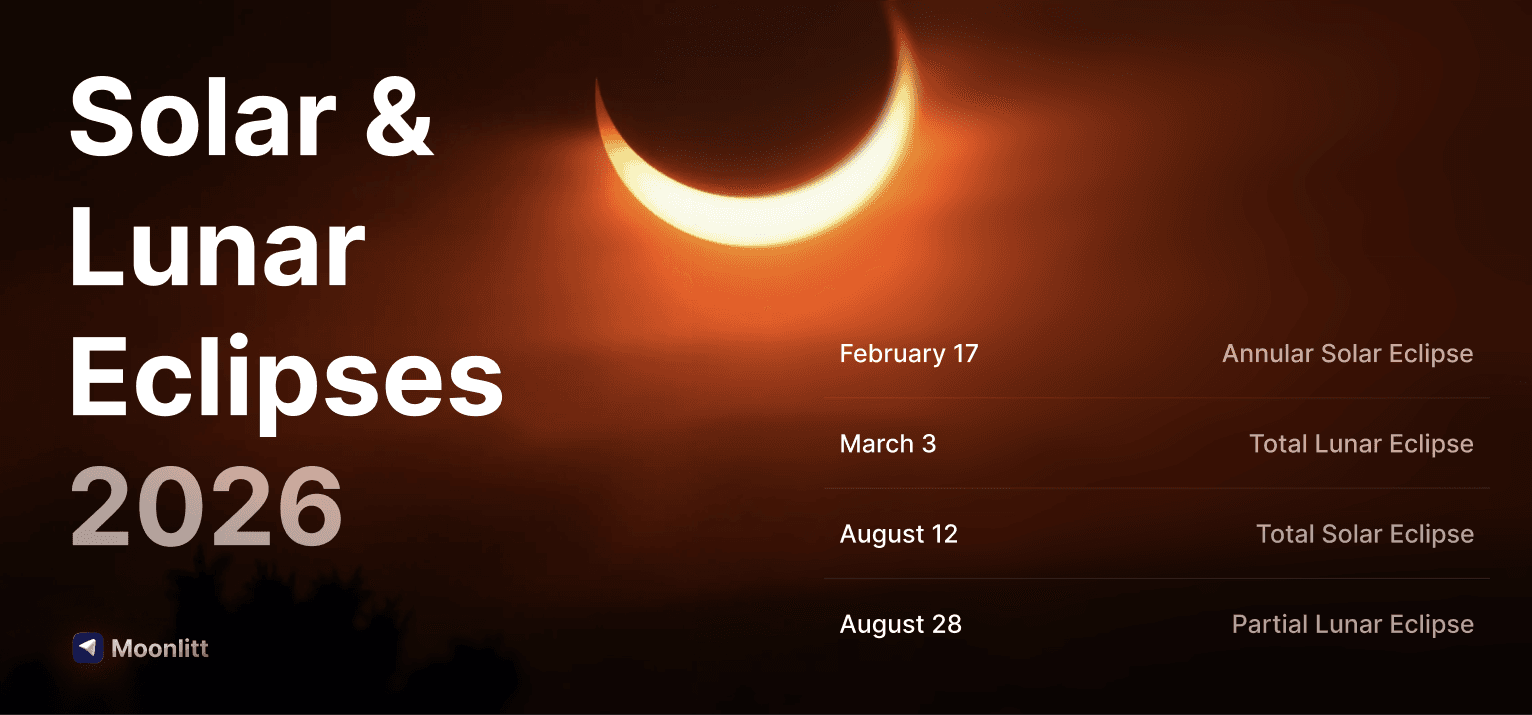
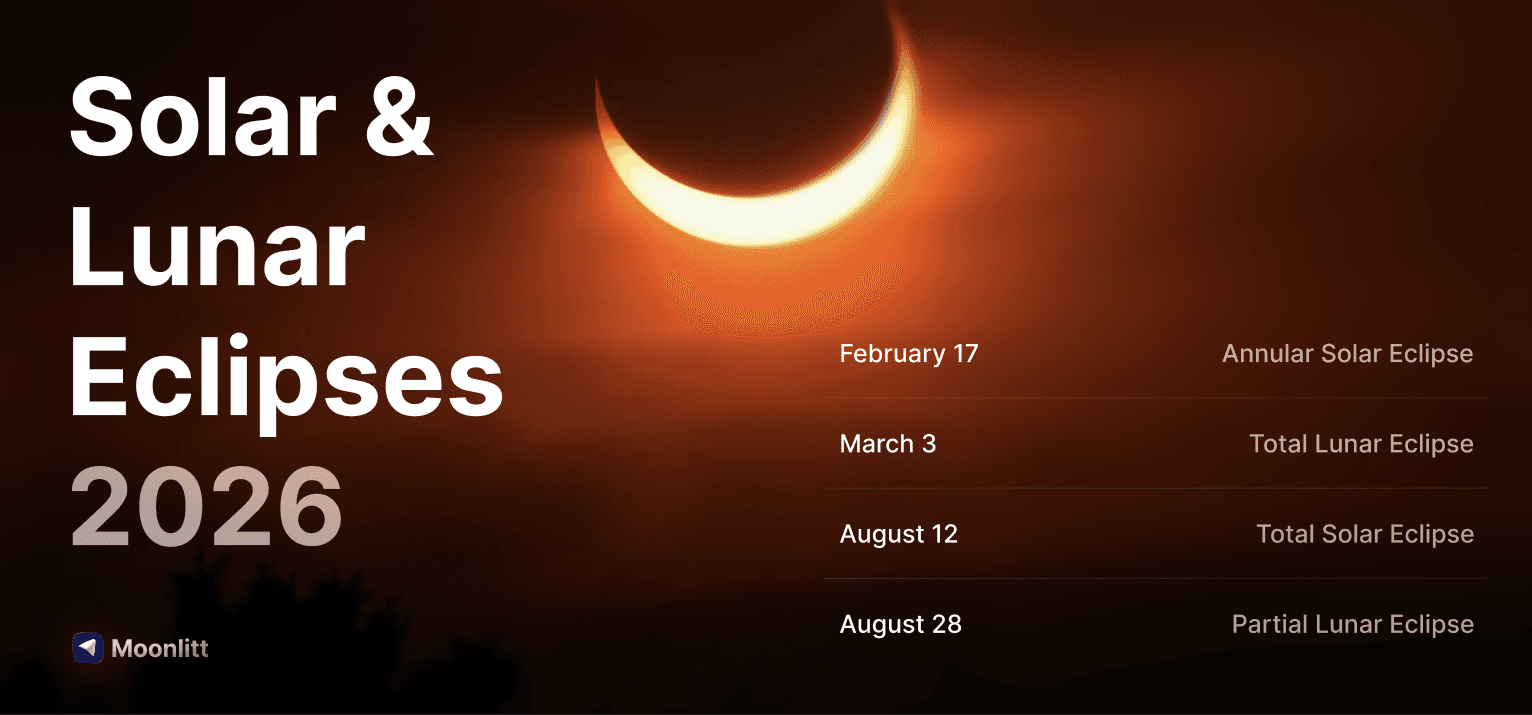
Eclipse Lineup for 2026
Timing and visibility always depend on where you are on Earth, so local planning matters. For exact local times, visibility, and altitude, Moonlitt can help you check what each eclipse looks like from your location.
Annular Solar Eclipse
February 17, 2026 | Primarily visible across Antarctica and the Southern Ocean
The first eclipse of 2026 is an annular solar eclipse.
This happens when the Moon passes in front of the Sun while it is near the farthest point in its orbit from Earth. Because of that distance, the Moon appears a little smaller than usual and cannot completely cover the Sun.
At maximum eclipse, the Sun turns into a bright ring surrounding the Moon, often described as a ring of fire. The sky does not go dark, and daylight conditions remain surprisingly normal, but the Sun’s shape looks strikingly unnatural.
Annular solar eclipses are only visible along a narrow path on Earth. If you are inside that path, the ring effect lasts just a few minutes. Outside it, you may see a partial solar eclipse or nothing at all.
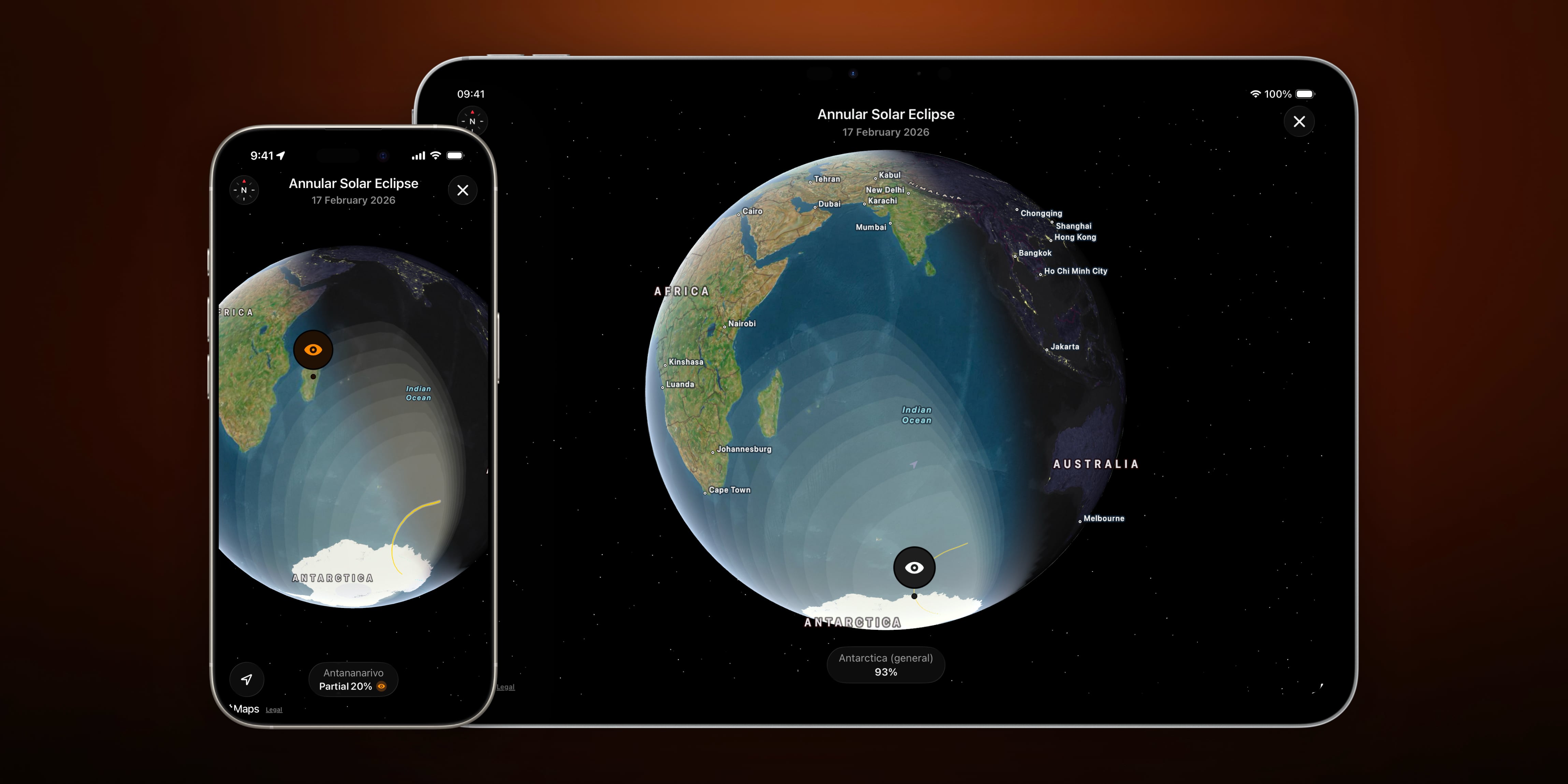
Moonlitt's Eclipse Map
For this event, the annular path passes mainly over Antarctica. A partial solar eclipse will be visible from parts of southern Africa and Madagascar, while most of the rest of the world will not see this eclipse at all.
It is important to remember that solar eclipses are never safe to watch without protection. Proper eclipse glasses or certified solar filters are required at every stage of this event.
Total Lunar Eclipse (Blood Moon)
March 3, 2026 | Completely visible over northeast Asia, northwestern North America, and the central Pacific Ocean
Just two weeks after the annular solar eclipse, the Moon takes center stage with a total lunar eclipse.
During a total lunar eclipse, the full Moon moves completely into Earth’s shadow. Instead of disappearing, it slowly turns deep shades of red, copper, or orange. This color comes from sunlight filtering through Earth’s atmosphere before reaching the Moon.
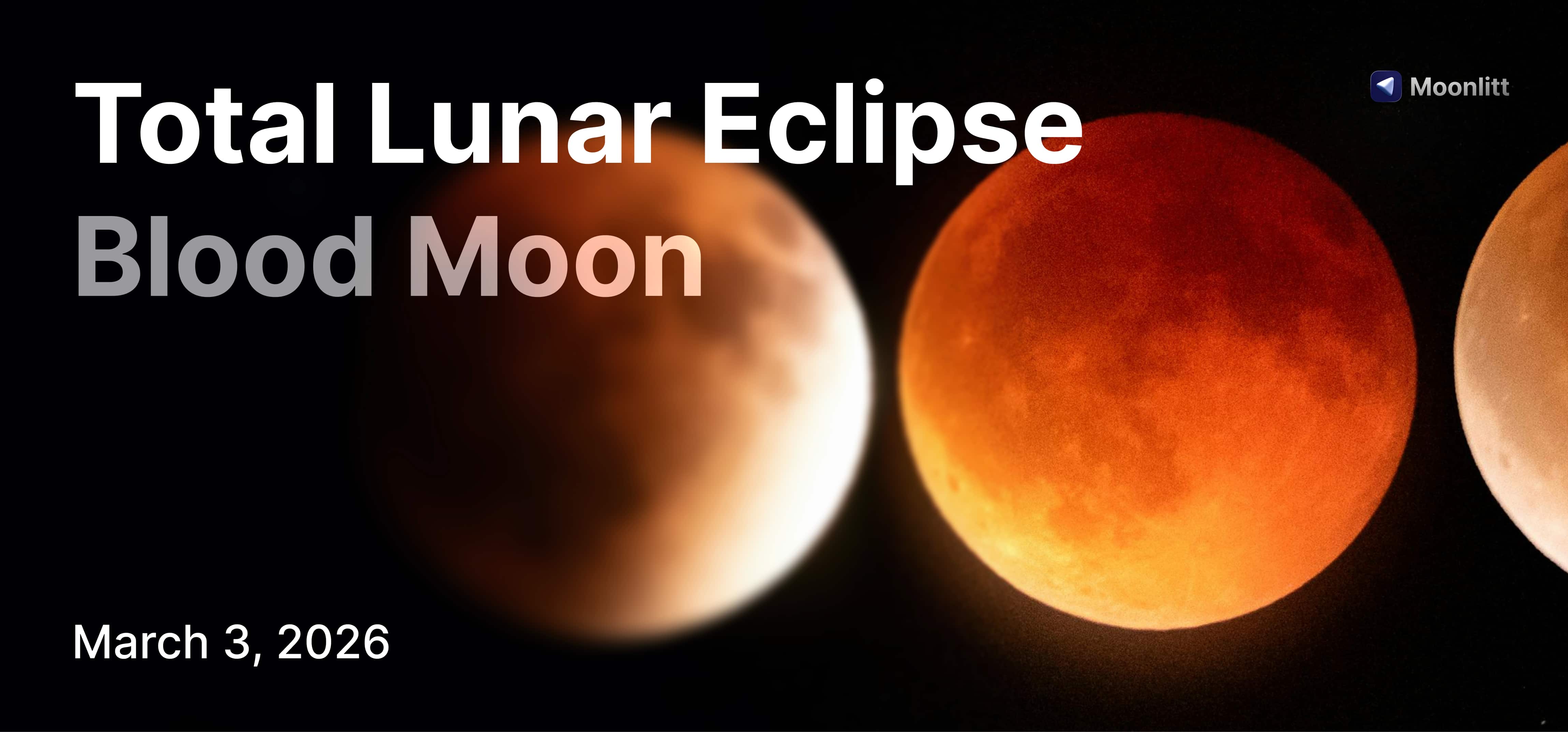
Total lunar eclipses are often called Blood Moons. Blood moon happens when the Moon passes fully into Earth’s umbra and turn in a deep reddish or orange color.
Unlike solar eclipses, lunar eclipses are calm and forgiving. They are safe to watch with your eyes and unfold slowly over several hours, giving plenty of time to step outside and check the sky.
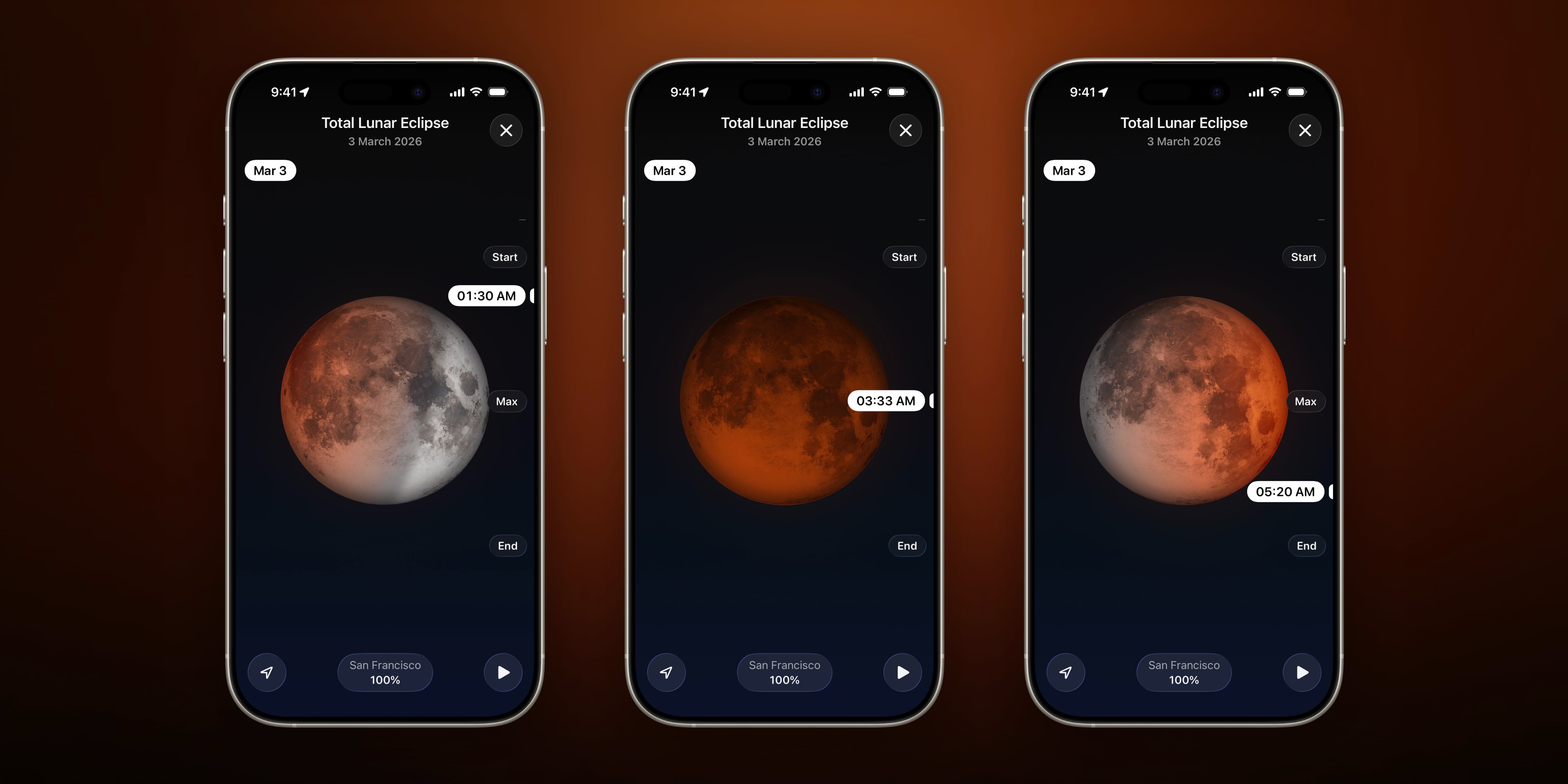
Moonlitt can help you preview how the Moon’s color may shift during the eclipse, with a real time simulation of the eclipse scene.
Totality itself usually lasts close to an hour, which makes this one of the easiest eclipses to enjoy without planning gear or travel.
That said, visibility still depends on where you are. The Moon needs to be above the horizon, so your timing and best moment can look very different from someone else’s.
Checking local visibility and exact timings in Moonlitt helps you know when to look.
Read more about it here…
Total Solar Eclipse
August 12, 2026 | Visible from most of Europe, North Africa, and parts of North America
The most anticipated eclipse of 2026 arrives in August.
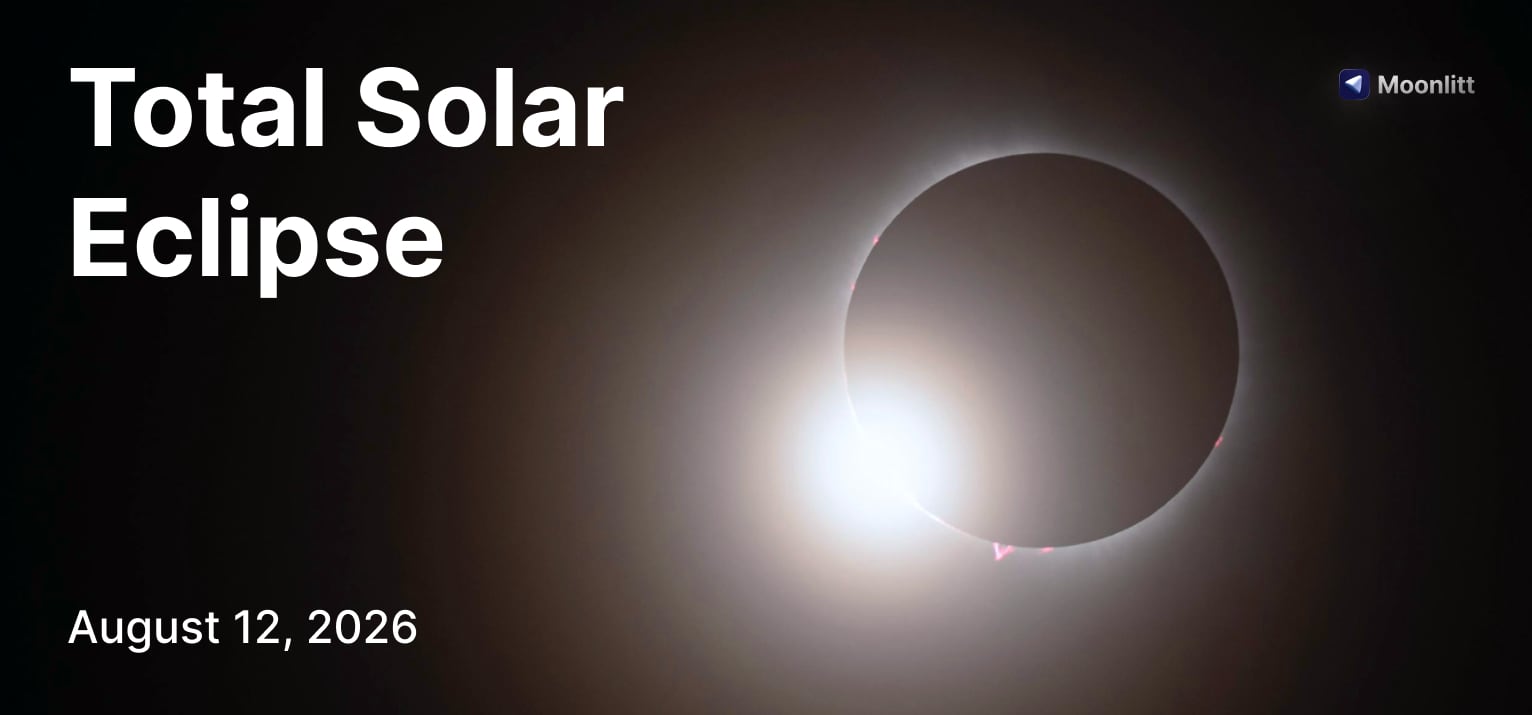
A total solar eclipse occurs when the Moon completely covers the Sun. For a brief period, daylight drops into twilight, temperatures can dip, and the Sun’s outer atmosphere, the corona, becomes visible.
This experience only happens within a narrow path of totality. Being even slightly outside that path changes everything. Instead of darkness, you will see only a partial eclipse, and the dramatic effects disappear.
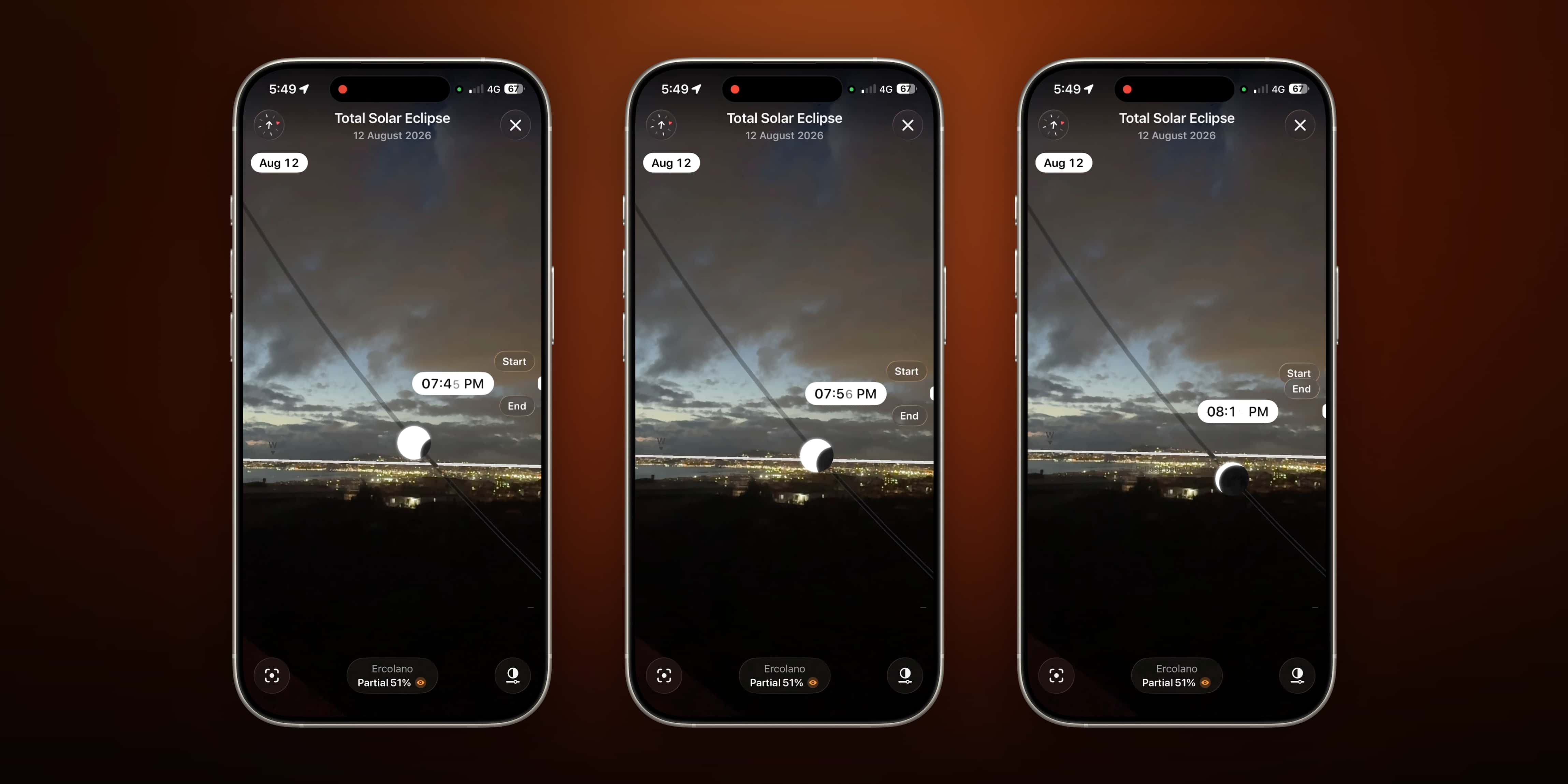
Moonlitt's Eclipse Preview in AR
For this eclipse, totality is limited to specific regions of the world. If you are not inside the path, you will need to travel to experience full totality.
Moonlitt can help you explore where the path of totality crosses Earth and compare locations, making it easier to plan where to be on eclipse day.
This is an eclipse that rewards careful planning. Knowing exactly where you need to be makes the difference between witnessing a rare natural event and seeing only a partial phase.
Read more about it here…
Partial Lunar Eclipse
August 27-28, 2026 | Visible across most of Europe, Africa, North & South America, Antarctica, and parts of Asia
The final eclipse of 2026 is a partial lunar eclipse.
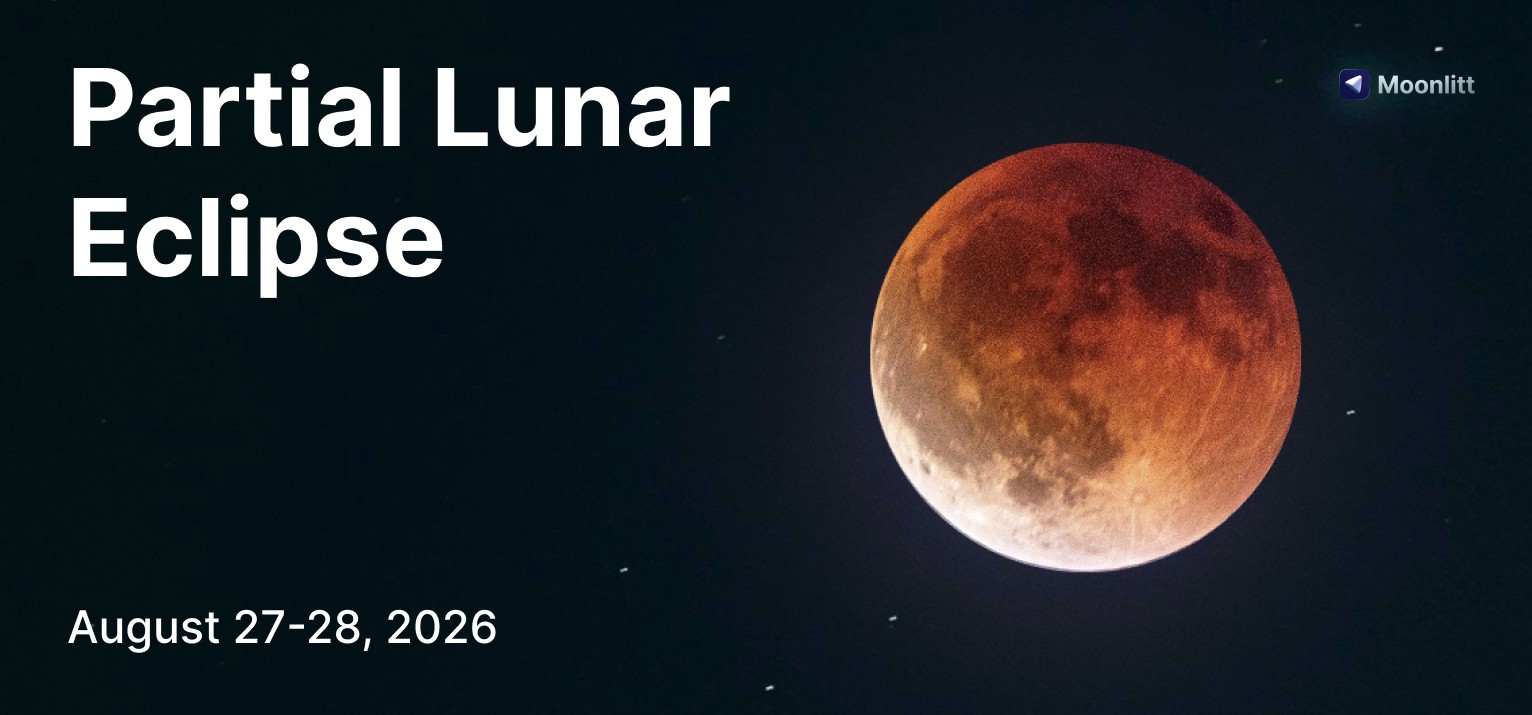
Partial lunar eclipses are more subtle than total ones, but they still clearly show the shape of Earth’s shadow in space. They are also easy to watch, safe for your eyes, and visible from large parts of the world depending on timing.
For this event, the Moon passes almost entirely through Earth’s shadow, with about 93 percent of the lunar disk affected. While it does not reach full totality, the eclipse will appear very close to one.
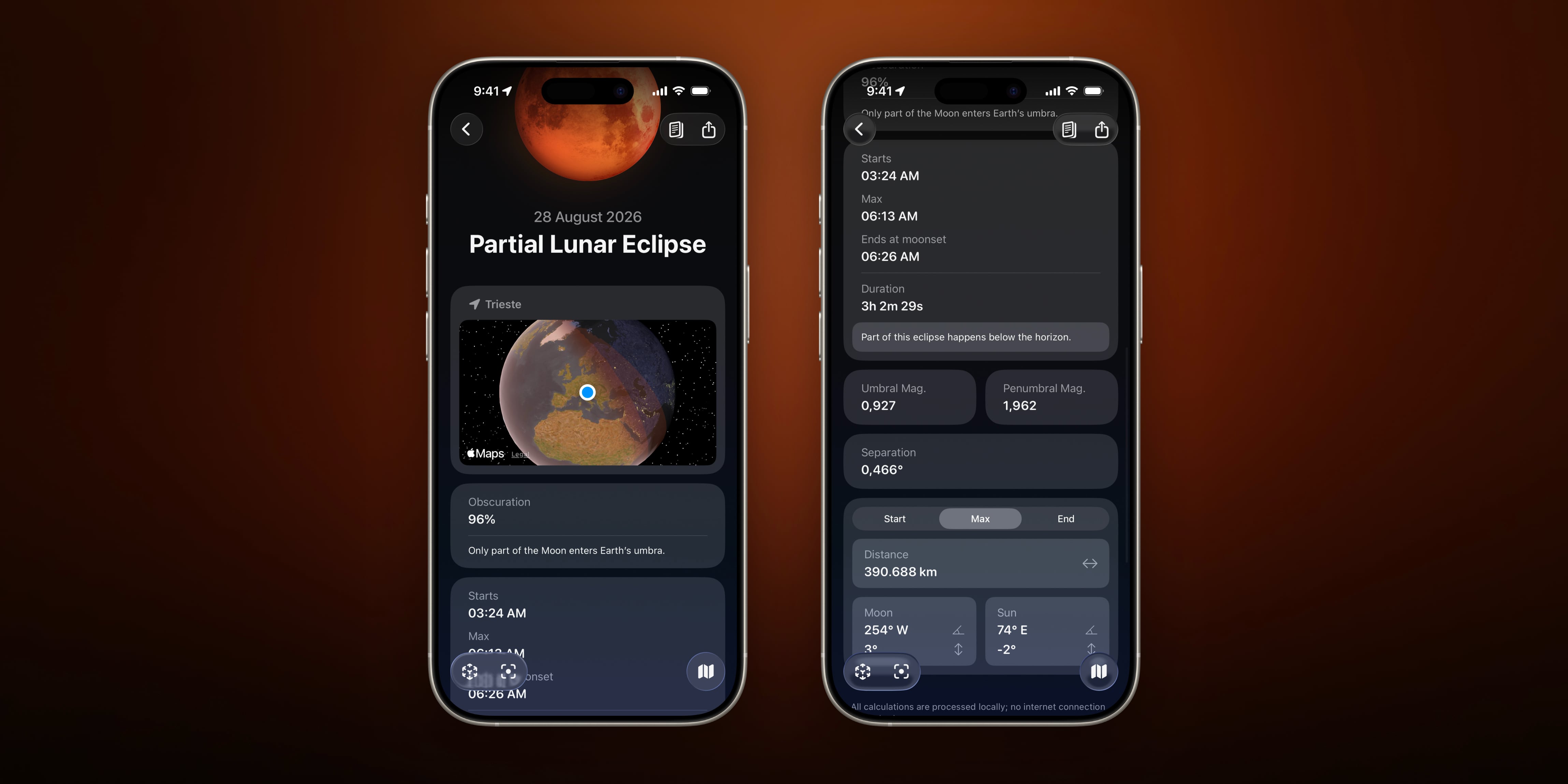
Moonlitt's details & visibility info
As with any eclipse, visibility depends on location and sky conditions. Clouds can block the view entirely, which is why checking the forecast close to the event matters.
Moonlitt includes weather forecasts up to 10 days ahead of the eclipse date, helping you decide whether conditions are likely to cooperate.
Read more about it here…
Frequently Asked Questions (FAQ)
Are all eclipses visible everywhere?
No. Lunar eclipses can be seen from anywhere the Moon is above the horizon at the time of the event. Solar eclipses are much more location dependent and are only visible from specific regions on Earth, depending on the eclipse path.
How do I know if an eclipse is visible from my location?
Visibility depends on where you are, local timing, and whether the Moon or Sun is above the horizon. Sunrise, sunset, and Moon altitude can all change how an eclipse appears.
Using a location based tool makes this much easier. Moonlitt shows whether each 2026 eclipse is visible from your location, when it happens locally, and how high the Sun or Moon will be in the sky.
How should I watch a lunar eclipse?
Lunar eclipses are safe to watch with your eyes and do not require any special equipment. They unfold slowly, so you can step outside at different moments and still catch the event.
If you want more detail or richer color, binoculars or a small telescope can help. For photography, a tripod is highly recommended, especially during totality or deep partial phases when the Moon becomes much darker.
How should I watch a solar eclipse safely?
Solar eclipses always require proper eye protection. Certified solar eclipse glasses or approved solar filters are the only safe way to look at the Sun.
Practicing with your setup before eclipse day helps reduce stress and mistakes.
Can weather affect eclipse visibility?
Yes. Clouds can block any eclipse completely, even if visibility is otherwise perfect.
Checking the weather forecast close to the event is important. Moonlitt includes weather forecasts up to 10 days ahead of each eclipse, helping you decide whether conditions are likely to cooperate.
Which eclipse is the most impressive in 2026?
For observers inside the path of totality, the August 12 total solar eclipse will be the most dramatic event of the year.
Eclipses are predictable, but experiencing them well takes a bit of preparation.
2026 offers a varied lineup, from relaxed lunar eclipses to a rare total solar eclipse. With the right expectations and local planning, each one can be worth the pause.
January 13, 2026